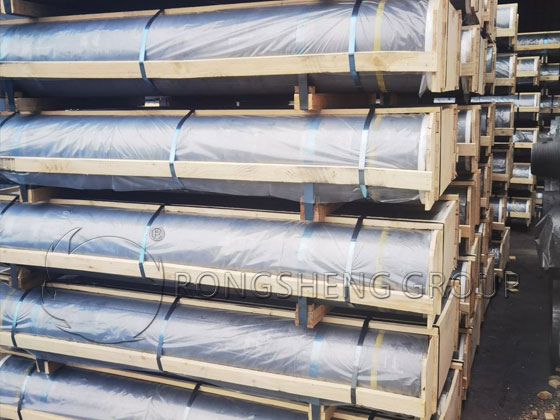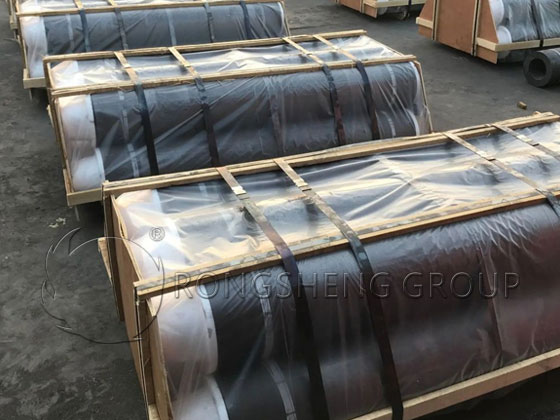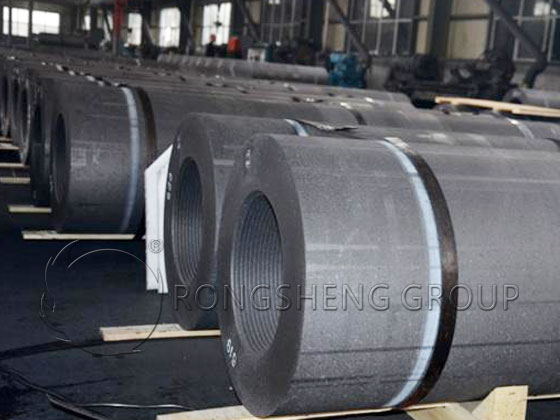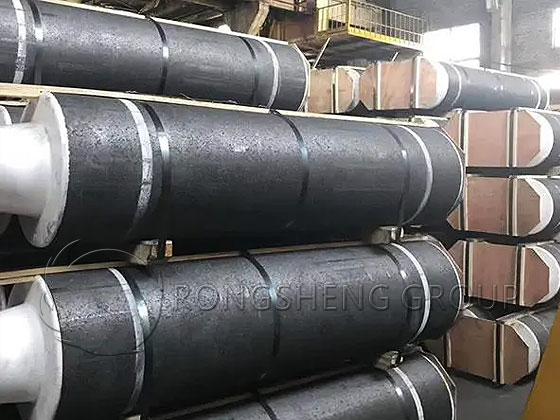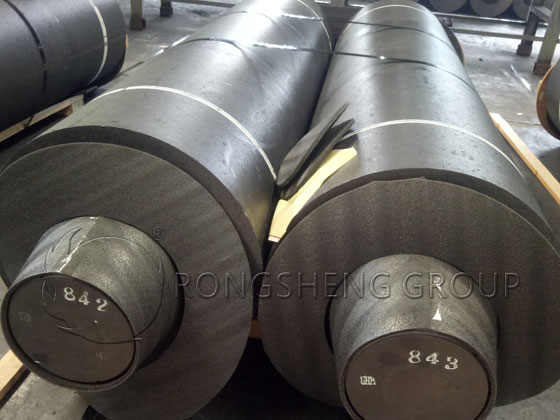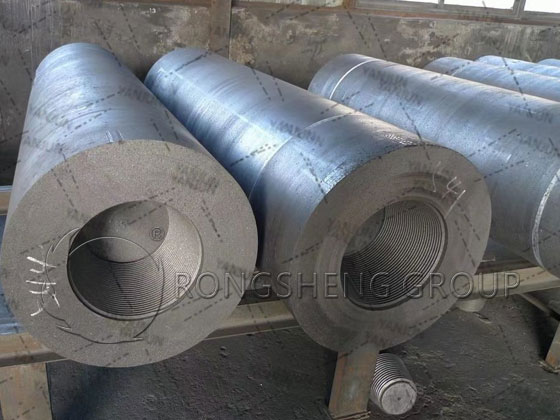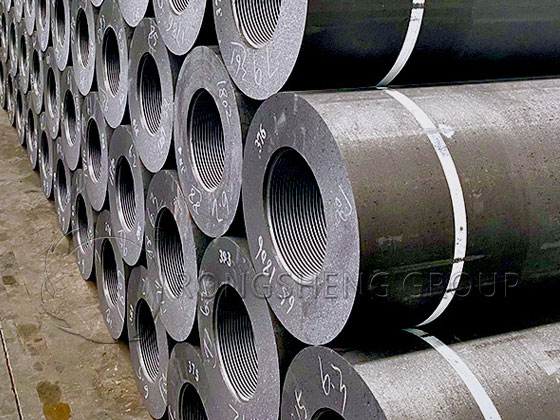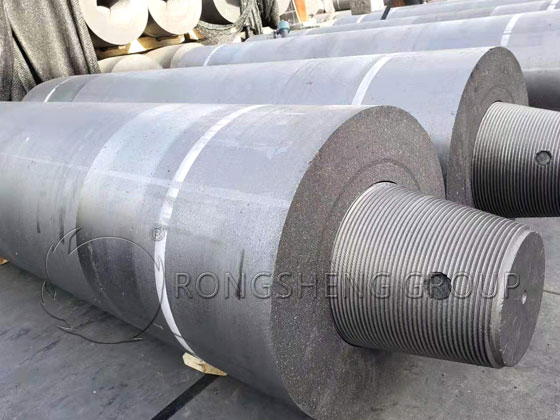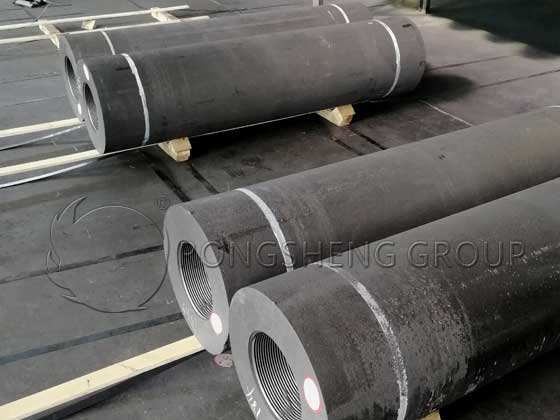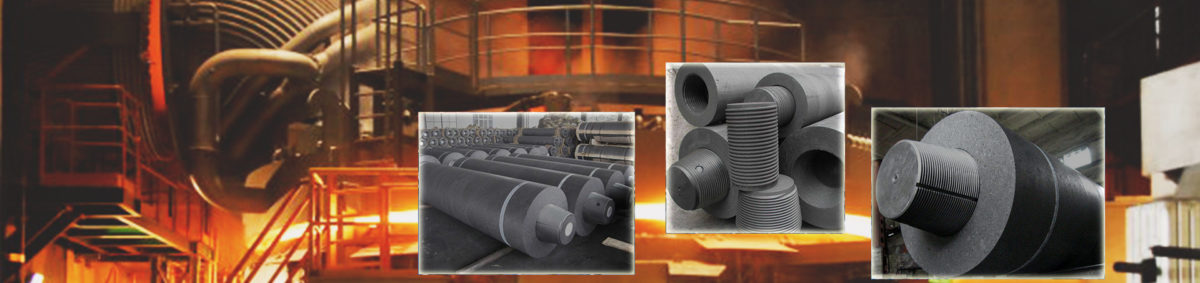
From Petroleum Coke to Molten Steel: HP Grade EAF Graphite Electrodes Manufacturing

Behind every ton of steel produced in an electric arc furnace lies an invisible engineering triumph: the graphite electrode column. But how does a black, granular petroleum byproduct transform into a silver-gray conductor capable of wielding 50,000 amps at 3000°C? The answer lies in graphite electrode manufacturing—a complex, multi-stage process that few understand and even fewer control.

At Rongsheng Graphite Electrodes Manufacturer, we live this process every day. This article explains the critical role of HP graphite (High Power grade), the application of EAF graphite electrodes in modern melt shops, and the step-by-step reality of graphite electrode manufacturing. Whether you’re a procurement professional, a furnace operator, or an engineering student, understanding these three elements will change how you view electrode performance.

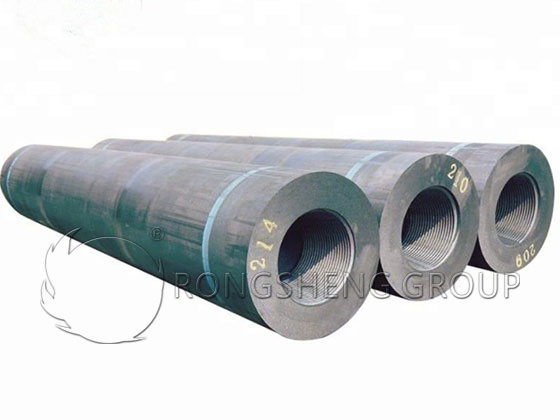
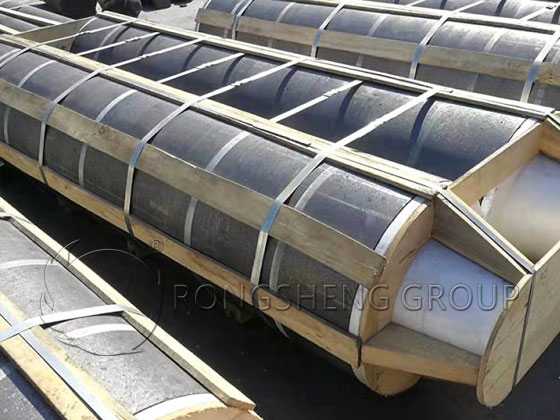
350mm Graphite Electrode for Steelmaking Suppliers
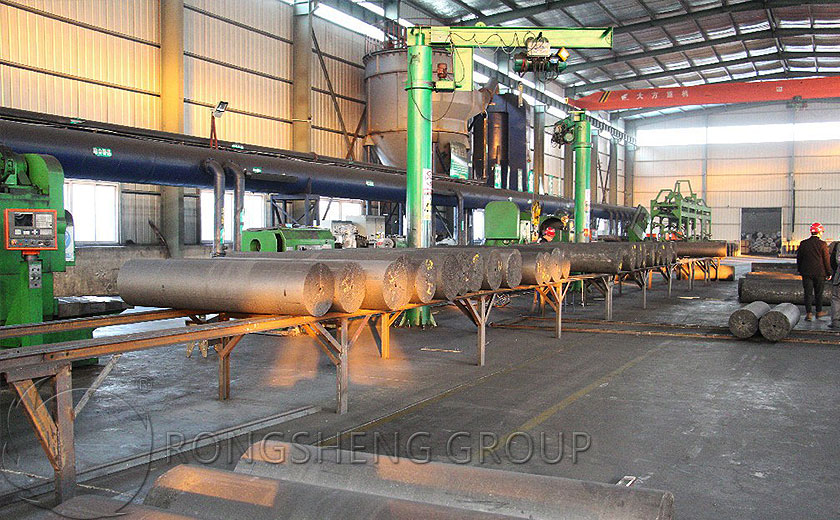
Rongsheng Graphite Electrodes Manufacturer

HP Graphite: The Workhorse Grade for Mid-Sized Furnaces

Let’s start with the grade that serves the widest segment of the market: hp graphite. HP stands for High Power, positioned between RP (Regular Power) and UHP (Ultra-High Power) in both performance and cost.

What defines HP graphite?

    • Electrical resistivity: 6.5–7.5 µΩ·m (compared to 8.0–9.0 for RP, 5.0–5.8 for UHP)
    • Flexural strength: 9.5–11.0 MPa
    • Bulk density: 1.68–1.72 g/cm³
    • Coefficient of thermal expansion (CTE): 2.0–2.5 × 10⁻⁶/K

Where does HP graphite excel?

    • EAFs with transformer ratings of 15–30 MVA
    • Ladle refining furnaces requiring stable arc control
    • Stainless steel and specialty alloy production
    • Foundries melting 40–80 tons per heat

Why choose HP over other grades? HP graphite offers the optimal balance. It delivers significantly lower consumption than RP (typically 10–15% reduction) without the premium cost of UHP. For the majority of mid-sized melt shops, hp graphite represents the best total cost of ownership.

Rongsheng’s HP grade uses premium needle coke, double impregnation (like UHP), but a slightly shorter graphitization cycle. The result: UHP-like density at HP pricing. Our customers consistently report HP consumption below 1.6 kg per ton of steel—competitive with some UHP products.

EAF Graphite Electrodes: How They Function in the Furnace

Understanding eaf graphite electrodes requires knowing what happens inside the electric arc furnace during a typical melt cycle.

The three-electrode configuration:
Most EAFs use three graphite electrodes arranged in a triangle. Each electrode connects to one phase of the transformer. The arcs jump from electrode tips to the scrap metal, creating temperatures of 3000–4000°C at the arc core.

What the electrode experiences during one heat (45–60 minutes):

    1. Boring stage (first 5–10 minutes) – Electrodes lower into scrap. Arcs penetrate the charge. Maximum mechanical stress from scrap collapse.
    2. Meltdown stage (next 20–30 minutes) – Arcs fully established. Highest thermal stress. Sidewall oxidation begins.
    3. Refining stage (final 10–15 minutes) – Arcs stabilize. Temperature holds at 1600–1650°C. Electrode consumption slows.

Why eaf graphite electrodes consume at different rates:

    • Tip consumption – Caused by arc radiation and chemical reactions with slag. Typically 40–50% of total consumption.
    • Sidewall oxidation – Reaction with air and CO₂ above 600°C. Typically 30–40% of total consumption.
    • Breakage – Mechanical or thermal shock. Ideally below 5% of total consumption.

Quality graphite electrode manufacturing directly impacts all three consumption mechanisms. Higher density reduces sidewall oxidation. Lower CTE reduces thermal shock breakage. Higher flexural strength reduces mechanical breakage.

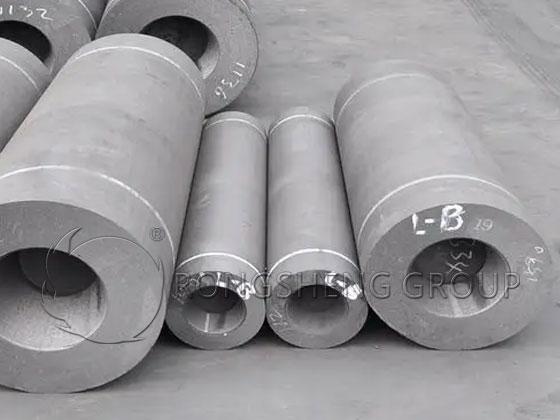
RP Graphite Electrode Suppliers
Quality graphite electrode manufacturing

Graphite Electrode Manufacturing: The Six Essential Stages

Now let’s walk through actual graphite electrode manufacturing as practiced at Rongsheng. Each stage builds upon the previous one. Skipping or shortening any stage compromises final performance.

Stage 1: Raw material preparation
Calcined needle coke arrives in different particle sizes (0–0.5mm, 0.5–4mm, 4–8mm). We sieve, crush, and mill to precise specifications. Binder pitch (coal tar pitch) is heated to 150–180°C. The formulation varies by grade—more fine particles for UHP, more coarse for RP.

Stage 2: Mixing and kneading
Needle coke and hot pitch combine in a heated kneader (120–160°C) for 45–60 minutes. The mixture, now called “paste,” must achieve uniform binder distribution. Under-mixing creates weak zones. Over-mixing degrades particle structure.

Stage 3: Forming (extrusion or isostatic pressing)
For diameters up to 700mm, Rongsheng uses vertical extrusion. The paste fills a cylinder, a ram applies pressure (3,000–5,500 tons), and the column extrudes through a die. Green density after forming: 1.72–1.78 g/cm³. Isostatic pressing (used for larger diameters) applies uniform pressure from all directions.

Stage 4: Baking
Green electrodes load into ring furnaces. Temperature rises from ambient to 1200°C over 20–28 days. The ramp rate is critical—too fast creates internal cracks. Baking converts pitch into solid carbon binder (coke). Baked density reaches 1.62–1.68 g/cm³. Porosity: 20–25%.

Stage 5: Impregnation and rebaking
Electrodes go into an autoclave. Vacuum (0.06 MPa absolute) removes air from pores. Hot pitch (200°C) floods the chamber. Pressure forces pitch into pores. Then the electrode rebakes to convert this pitch into carbon. RP grade: one impregnation. HP and UHP: two impregnations. Final bulk density: 1.70–1.76 g/cm³.

Stage 6: Graphitization
The most energy-intensive stage. Electrodes load into Acheson furnaces surrounded by granular coke (resistive medium). Power applies for 15–25 days. Temperature reaches 2800–3000°C. Amorphous carbon transforms into crystalline graphite. Resistivity drops by 40–50%. This stage consumes 3,000–4,000 kWh per ton of electrode.

Stage 7: Machining
Graphitized electrodes move to CNC lathes. We cut:

    • Socket threads (female) into each end
    • Outer diameter to final tolerance (±1.5mm)
    • Warning lines (indicating thread depth)
      Nipples (male connectors) are machined from the same graphite grade. Thread taper: 1:10 or 1:12, depending on standard (ISO, ASTM, or JIS).

Stage 8: Quality control
Every electrode undergoes:

    • Ultrasonic testing (internal fissures >1mm flagged)
    • Resistivity measurement (four points per electrode)
    • Dimensional inspection (length, diameter, thread gauge)
    • Visual inspection (surface cracks, chips)

Only after passing all eight stages does an electrode ship from our graphite electrode manufacturing facility.

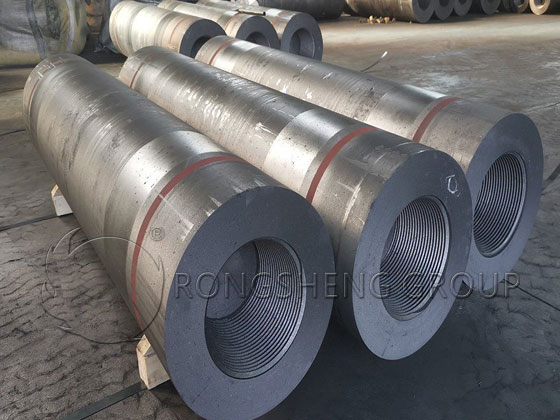
Rongsheng HP Grade Graphite Electrode

How Manufacturing Quality Affects HP Graphite Performance

Let’s connect graphite electrode manufacturing back to hp graphite performance. Two electrodes with identical specifications can perform differently based on manufacturing consistency:

Example: Resistivity variation

    • Supplier A (low control): Batch-to-batch resistivity varies 6.5–8.0 µΩ·m (23% range)
    • Rongsheng: Batch-to-batch resistivity varies 6.5–7.0 µΩ·m (7% range)

Result: Supplier A’s furnace operators see fluctuating power input. Rongsheng’s customers see stable arcs.

Example: Thread precision

    • Supplier B (poor machining): Thread taper varies ±0.4mm over 300mm
    • Rongsheng: Thread taper varies ±0.1mm over 300mm

Result: Supplier B’s columns loosen after 5–6 heats. Rongsheng’s columns remain tight for 15+ heats.

Why Rongsheng for HP Graphite and EAF Graphite Electrodes?

With decades of graphite electrode manufacturing experience, Rongsheng offers:

    • Integrated production – All eight stages under one roof. No outsourced steps.
    • Grade flexibility – RP, HP, and UHP from the same production lines.
    • Diameter range – 300mm to 700mm. HP graphite available in all sizes.
    • Technical support – Our engineers analyze your furnace before recommending specifications.
    • Lead time – 25 days for custom orders. Stock items ship within 10 days.

The Bottom Line

HP graphite serves the widest segment of EAF steelmakers. EAF graphite electrodes transform electrical energy into melting heat. And graphite electrode manufacturing determines whether that transformation happens efficiently or expensively.

Rongsheng controls all three. We don’t trade electrodes. We manufacture them—from petroleum coke to finished column.

Ready to reduce your HP graphite consumption? Contact Rongsheng today for a free furnace analysis, grade recommendation, and sample batch test records.

For Steelmaking Graphite Electrode and RP 400mm Graphite Electrode Factory

At first glance, a popular sandbox video game and heavy industrial steelmaking have nothing in common. But search data tells a different story. Every month, thousands of players type “minecraft graphite electrode” into search engines, looking for mods, builds, or tutorials involving this fictional item. Meanwhile, real procurement professionals search for “rp 400mm graphite electrode factory” and “uhp graphite electrode manufacturers” to source critical melt shop components.

At Rongsheng Graphite Electrodes Manufacturer, we find this intersection fascinating. One search reflects gaming creativity. The other reflects industrial necessity. This article bridges both worlds—explaining what a minecraft graphite electrode might look like in theory, then grounding you in the real-world specifications of RP 400mm electrodes and the qualifications of top uhp graphite electrode manufacturers.

Rongsheng Graphite Electrodes Manufacturer

The Minecraft Graphite Electrode Phenomenon: A Digital Curiosity

Let’s address the unexpected keyword first: minecraft graphite electrode. Why do players search for this?

Minecraft, the best-selling video game of all time, features crafting systems where players combine materials to create tools, weapons, and industrial components. Mods like IndustrialCraft, GregTech, and Immersive Engineering add realistic manufacturing chains—including graphite electrodes for virtual arc furnaces.

In these mods, a minecraft graphite electrode typically:

    • Is crafted from coal coke or graphite powder
    • Serves as a consumable component in virtual EAFs
    • Requires replacement after a certain number of “heats”
    • Drops as an item when the virtual furnace breaks

Why does this matter to a real graphite electrode manufacturer? Because it introduces a new generation of engineers and procurement specialists to the concept of graphite electrodes through gaming. A teenager learning about electrode consumption in Minecraft today might be a mill manager specifying UHP grades ten years from now.

At Rongsheng, we appreciate this cultural touchpoint. No, we don’t sell minecraft graphite electrode skins or mods. But we respect any channel that educates future steelmakers about why graphite matters.

Real-World Reality: Visiting an RP 400mm Graphite Electrode Factory

Now let’s leave the digital world and enter an actual production facility. What distinguishes a genuine rp 400mm graphite electrode factory from a trading company or re-seller?

An authentic factory—like Rongsheng’s 60,000-ton-per-year facility—has these five physical assets:

    • 1. Needle coke storage silos – You cannot make RP 400mm electrodes without calcined needle coke on hand. We maintain three months of buffer inventory across multiple particle sizes.
    • 2. Continuous mixing and forming lines – 400mm diameter requires specific forming pressures. Our 5,500-ton vacuum extruder ensures green density above 1.75 g/cm³ before baking.
    • 3. Ring furnace battery – 36 individual baking chambers operating on 28-day cycles. You cannot outsource baking and claim factory status.
    • 4. Impregnation autoclaves – RP grade receives single impregnation. We can identify our autoclave batch numbers for any electrode shipped.
    • 5. CNC threading stations – 400mm electrodes use 5–6 inch nipples. Our lathes maintain thread taper tolerance of ±0.1mm over 300mm length.

When you source from an rp 400mm graphite electrode factory rather than a trader, you get:

    • Direct batch traceability
    • Shorter lead times (no waiting for a third-party shipment)
    • Consistent specifications (the factory controls every variable)
    • Lower prices (no middleman markup)

Rongsheng is a true RP 400mm graphite electrode factory. We invite qualified buyers to tour our production lines. Few suppliers can make that offer.

RP 400mm graphite electrode factory

RP 400mm Specifications: When to Use This Grade and Diameter

The combination of RP (Regular Power) grade and 400mm diameter serves a specific market segment. Let’s detail what this means.

RP Grade Properties:

    • Electrical resistivity: 8.0–9.0 µΩ·m
    • Flexural strength: 7.0–8.5 MPa
    • Bulk density: 1.62–1.68 g/cm³
    • Ash content: ≤ 0.5%

400mm Diameter Advantages:

    • Cross-sectional area: 125,600 mm²
    • Current capacity: Typically 25,000–35,000 amps
    • Weight per meter: Approximately 200–220 kg

Ideal applications for RP 400mm electrodes:

    • Small EAFs (30–50 tons capacity) with transformer ratings below 15 MVA
    • Submerged arc furnaces producing ferrosilicon or silicon metal
    • Foundry melting operations with extended tap-to-tap times
    • Ladle refining furnaces in smaller melt shops

Why choose RP over HP or UHP at 400mm? Cost optimization. If your furnace doesn’t demand maximum power density, RP grade delivers acceptable consumption at 20–30% lower upfront cost than HP. The key is accurate furnace analysis—which Rongsheng provides before recommending any grade.

UHP Graphite Electrode Manufacturers: What Separates the Best from the Rest

Moving from RP to the opposite end of the performance spectrum, let’s evaluate uhp graphite electrode manufacturers. UHP (Ultra-High Power) represents the most demanding grade, requiring the highest raw material quality and most precise process control.

What defines a genuine UHP graphite electrode manufacturer?

    • Needle coke source – Only specific calcined needle coke from a limited number of global refiners (primarily in the US, Japan, and China) yields the crystalline structure required for UHP resistivity below 5.8 µΩ·m.
    • Double impregnation – UHP requires two pitch impregnation cycles to achieve bulk density above 1.72 g/cm³. Single impregnation cannot meet UHP specs.
    • Extended graphitization – Minimum 20 days at 2800–3000°C. Shorter cycles leave amorphous carbon domains that increase resistivity.
    • 100% ultrasonic testing – Every UHP electrode must be scanned for internal fissures. Batch sampling is insufficient.

Rongsheng’s UHP capabilities:

    • Resistivity as low as 5.2 µΩ·m (exceeding ISO standards)
    • Flexural strength up to 12.0 MPa
    • CTE as low as 1.2 × 10⁻⁶/K
    • Diameters from 300mm to 700mm

Among uhp graphite electrode manufacturers, Rongsheng competes on consistency—not just peak performance. Our UHP electrodes show batch-to-batch resistivity variation below ±0.3 µΩ·m. Many competitors vary by ±0.8 µΩ·m or more.

uhp graphite electrode manufacturer Rongsheng

Why Choose Rongsheng Across All Three Categories?

Whether you need to visit an rp 400mm graphite electrode factory, understand the minecraft graphite electrode phenomenon (for educational or marketing purposes), or evaluate uhp graphite electrode manufacturers for a major furnace upgrade, Rongsheng offers:

    • Transparency – We publish real specifications, not marketing ranges.
    • Traceability – Every electrode batch tracked from raw coke to final shipment.
    • Technical support – Engineers available for furnace-specific recommendations.
    • Global shipping – Packaged for sea freight with full documentation.

Common Questions About These Keywords

Q: Does Rongsheng sell a minecraft graphite electrode?
A: No. We manufacture real electrodes for real arc furnaces. But we support gaming communities that teach industrial processes.

Q: Can I tour your RP 400mm graphite electrode factory?
A: Yes. Qualified buyers and engineering partners are welcome by appointment.

Q: How do you compare to other uhp graphite electrode manufacturers?
A: Request our batch test data. Compare our resistivity consistency and breakage rates. The numbers speak for themselves.

RP 400mm Graphite Electrode Factory

From a minecraft graphite electrode in a video game to an rp 400mm graphite electrode factory producing thousands of tons per year, to the specialized world of uhp graphite electrode manufacturers serving the largest melt shops—graphite electrodes connect digital imagination and industrial reality.

Rongsheng operates firmly in the real world. But we respect every path that leads to better understanding of this essential product.

Whether you need RP 400mm factory-direct pricing or UHP specifications for a large EAF, contact Rongsheng today. Request batch test records, a factory tour invitation, or a consumption reduction proposal.

Reliable 350mm Graphite Electrode for SteelMaking Rongsheng Supplier

In every electric arc furnace melt shop, attention naturally focuses on the big components—the electrode column, the transformer, the scrap charge. But experienced maintenance teams know a different truth: small parts often cause big problems. One such component is the graphite electrode lift plug.

At Rongsheng Graphite Electrodes Manufacturer, we’ve seen mills lose hours of production because a poorly designed lift plug failed during electrode changing. We’ve also seen operators struggle to find reliable 350mm graphite electrode for steel making suppliers who deliver consistent quality at this specific diameter. This article addresses both topics—explaining what a lift plug does, why 350mm electrodes remain relevant, and how to source both from a single manufacturer.

350mm Graphite Electrode for Steelmaking Suppliers

What Is a Graphite Electrode Lift Plug?

graphite electrode lift plug (also called a lifting plug or handling plug) is a threaded cylindrical tool inserted into the electrode socket. It serves three critical functions:

    1. Lifting and positioning – During electrode column assembly, the lift plug screws into the electrode end, allowing overhead cranes to hoist the electrode vertically without damaging the threads.
    2. Thread protection – When electrodes are stored or shipped, the lift plug covers the female socket threads, preventing impact damage and debris infiltration.
    3. Alignment aid – During column makeup, the lift plug helps align the electrode with the nipple before final torquing.

Despite its simple appearance, a poorly manufactured graphite electrode lift plug can cause:

    • Cross-threading during installation
    • Stripped socket threads (requiring electrode rework or scrap)
    • Dropped electrodes (safety hazard and costly damage)
    • Misaligned columns leading to breakage under power

Why Graphite? The Material Choice for Lift Plugs

You might wonder why lift plugs are made of graphite rather than steel. The answer relates directly to why electrodes themselves are graphite. A steel lift plug would:

    • Have different thermal expansion than the graphite electrode socket
    • Gall or seize against the graphite threads
    • Conduct heat differently, potentially causing localized stress

A proper graphite electrode lift plug matches the electrode’s coefficient of thermal expansion and thread geometry exactly. It’s machined from the same graphite grade as the electrode itself—RP, HP, or UHP depending on the application.

Rongsheng manufactures lift plugs as direct complements to our electrode lines. Each plug is CNC-machined to the same thread specifications (ISO 7811 or customer-specific) as the electrode socket it will mate with. This ensures:

    • Smooth thread engagement without binding
    • Even load distribution during lifting
    • Reusable across multiple electrode changes (typically 20–30 cycles)
Graphite Electrode for Steelmaking


The 350mm Diameter: Still Essential for Many Furnaces

While larger diameters (450mm, 500mm, 550mm) dominate discussions of new ultra-high-power furnaces, the 350mm diameter remains widely used. As one of the established 350mm graphite electrode for steel making suppliers, Rongsheng continues to produce this size for specific applications.

Who uses 350mm graphite electrodes?

    • Small to mid-sized EAFs (30–60 ton capacity)
    • Ladle refining furnaces (LRF) with transformer ratings of 10–18 MVA
    • Submerged arc furnaces for ferroalloy production (silicon manganese, ferrosilicon)
    • Stainless steel melting in smaller melt shops
    • Foundry applications (cast iron and specialty alloys)

Why 350mm remains relevant:

    • Transformer matching – Not every furnace benefits from larger diameters. A 350mm electrode on a 12 MVA transformer operates at optimal current density (20–25 A/cm²).
    • Lower capital cost – 350mm electrode columns require smaller holders, arms, and roof openings.
    • Handling convenience – At approximately 150–180 kg per meter length, 350mm electrodes can be manipulated without specialized heavy lifting gear.
    • Inventory flexibility – Many mills keep 350mm electrodes as backup for their primary diameter during supply disruptions.

What to Look for in 350mm Graphite Electrode for Steel Making Suppliers

Sourcing from reliable 350mm graphite electrode for steel making suppliers requires evaluating four specific factors:

1. Diameter consistency
350mm sounds straightforward, but actual diameter can vary by ±3mm between suppliers. Rongsheng maintains ±1.5mm tolerance. Why does this matter? Your electrode holder clamping range is limited. Oversized electrodes won’t fit. Undersized ones slip.

2. Grade availability for 350mm
Some suppliers only produce RP grade in 350mm, forcing you to accept higher consumption. Rongsheng offers RP, HP, and UHP in 350mm. You should not have to compromise grade because of diameter.

3. Thread precision at this scale
350mm electrodes typically use 4–5 inch nipples (depending on manufacturer). Thread quality becomes more critical at smaller diameters because the nipple has less cross-sectional area to absorb stress. Poor threading causes nipple failure.

4. Anti-oxidation coating
The 350mm electrodes often operate in furnaces with longer tap-to-tap times (90–120 minutes). Sidewall oxidation becomes a major consumption factor. Rongsheng applies a proprietary coating that reduces oxidation by 35–40% compared to uncoated electrodes.

How Graphite Electrode Lift Plug and 350mm Electrodes Work Together

In daily operations, the graphite electrode lift plug and 350mm graphite electrode for steel making suppliers (providing the electrodes themselves) are inseparable. Here’s why:

When you receive a shipment of 350mm electrodes, each piece should come with a matching lift plug (or you should have standardized plugs in your tool crib). The plug allows you to:

    • Unload electrodes from shipping containers safely
    • Inspect socket threads before assembly
    • Stage electrodes vertically near the furnace
    • Make up the column without damaging the first thread

Without a proper lift plug, crews often improvise—using steel pipe fittings or modified bolts. These improvisations almost always damage socket threads. Damaged threads mean:

    • Reduced column strength
    • Higher risk of breakage at the joint
    • Potential electrode rejection (scrap value only)

Rongsheng supplies lift plugs as standard accessories with every electrode order. We also offer replacement plugs separately for customers who have lost or worn out existing ones.

350mm Electrodes in a Foundry Setting

Real-World Application: 350mm Electrodes in a Foundry Setting

Consider a typical foundry operating a 25-ton EAF for cast iron melting. Transformer rating: 14 MVA. Current electrode diameter: 350mm. Grade: HP (high power).

Before switching to Rongsheng as their 350mm graphite electrode for steel making suppliers, this foundry experienced:

    • Electrode consumption: 2.2 kg per ton of melt
    • Breakage incidents: One every 6–8 weeks
    • Lift plug issues: Frequent cross-threading (using steel fittings)

After switching to Rongsheng’s 350mm HP electrodes with matching graphite electrode lift plug:

    • Consumption dropped to 1.7 kg/ton (23% reduction)
    • Breakage incidents: Zero over six months
    • Thread damage: Eliminated entirely

The annual savings exceeded $45,000 USD, not including avoided downtime.

Common Problems Solved by Quality Lift Plugs

Problem 1: Stuck lift plugs – Low-quality graphite plugs swell after repeated use. Rongsheng’s plugs use the same high-density graphite as our electrodes, minimizing dimensional change.

Problem 2: Stripped socket threads – Often caused by steel plugs or mismatched thread tapers. Our plugs match electrode thread specifications exactly.

Problem 3: Lost plugs – Without standardized plugs, crews misplace them. Rongsheng offers high-visibility painted plugs (orange or yellow) that are easy to spot on the melt shop floor.

Why Choose Rongsheng for Both Components?

Most suppliers will sell you electrodes. Few provide matched graphite electrode lift plug solutions. Even fewer specialize in the 350mm diameter with full grade options. Rongsheng offers:

    • Single-source convenience – Electrodes, nipples, lift plugs, and anti-oxidation coating from one manufacturer.
    • 350mm in all grades – RP, HP, and UHP available from stock or custom production.
    • Thread guarantee – Every lift plug test-fits a sample electrode socket before shipping.
    • Technical documentation – Torque specifications, handling procedures, and storage recommendations provided.

The Bottom Line

Don’t let small components cause big failures. A proper graphite electrode lift plug protects your investment in every electrode column. And when you need the specific 350mm diameter, choose from 350mm graphite electrode for steel making suppliers who maintain the same quality standards across all diameters and grades.

Rongsheng delivers both—precision lift plugs and high-performance 350mm electrodes—from a single integrated facility.

Request your free sample graphite electrode lift plug and a current price list for 350mm RP, HP, or UHP electrodes. Contact Rongsheng‘s sales team today.

Why Are Electrodes Made of Graphite? RP Graphite Electrode Suppliers

Why Are Electrodes Made of Graphite? The Rongsheng Graphite Electrode Supplier. If you’ve ever walked through an electric arc furnace melt shop, you’ve seen them: thick, silver-gray columns carrying thousands of amps of electricity into a roaring bath of molten steel. But have you ever stopped to ask: why are electrodes made of graphite? Why not copper, steel, or tungsten?

The answer lies in a unique set of properties that no other material possesses. At Rongsheng Graphite Electrodes Manufacturer, we don’t just produce these essential tools—we’ve built our entire production philosophy around maximizing graphite’s natural advantages. This article explains the science behind graphite electrodes, introduces you to reliable rp graphite electrode suppliers, and explores the specialized category of mc graphite electrode products.

Rongsheng Graphite Electrodes Manufacturer

The Fundamental Question: Why Are Electrodes Made of Graphite?

Let’s start with the core question: why are electrodes made of graphite instead of alternative conductive materials?

Copper – Excellent conductivity, but melts at 1085°C. Arc furnace temperatures exceed 3000°C at the electrode tip. Copper would vaporize instantly.

Steel – Strong and cheap, but oxidizes rapidly at high temperatures. A steel electrode would burn away in minutes.

Tungsten – High melting point (3422°C), but extremely brittle and difficult to machine into threaded connections. Also, it’s 20 times denser than graphite, making column handling impossible.

Graphite wins because it delivers four critical advantages simultaneously:

    1. Sublimation above 3600°C – It doesn’t melt; it transitions directly from solid to gas at temperatures far beyond furnace operating ranges.
    2. Low thermal expansion (CTE as low as 1.5 × 10⁻⁶/K) – When you plunge a room-temperature electrode into a 2500°C arc, graphite expands minimally. Copper would expand by 2% and seize in the holder.
    3. High electrical conductivity – UHP grade graphite achieves resistivity below 6.0 µΩ·m, comparable to some metal alloys.
    4. Machinability – Graphite can be precisely threaded to create gas-tight column joints. Try threading tungsten or ceramics at scale.

So why are electrodes made of graphite? Because no other material can handle the combination of extreme heat, thermal shock, electrical demand, and mechanical stress that defines electric arc furnace operation. Graphite isn’t just a good choice—it’s the only choice.

RP Graphite Electrode Suppliers: What RP Means and When to Use It

Not every furnace needs ultra-high power graphite. That’s where RP (Regular Power) grade comes in. As one of the established rp graphite electrode suppliers, Rongsheng produces RP grade for specific applications where cost optimization matters more than maximum power density.

What is RP Graphite?

    • Resistivity: 8.0–9.0 µΩ·m (higher than HP or UHP)
    • Flexural strength: 7.0–8.5 MPa (lower than premium grades)
    • Current density rating: Typically 15–20 A/cm²
    • Application: Small EAFs (<40 tons), submerged arc furnaces for ferroalloys, silicon metal production, and some ladle furnaces

When should you choose RP over HP or UHP?

    • Your furnace transformer is rated below 15 MVA.
    • You’re melting low-demand materials (pig iron, certain ferroalloys).
    • Your tap-to-tap time targets are above 90 minutes (less thermal cycling stress).
    • You need the lowest possible upfront electrode cost.

The challenge with finding reliable rp graphite electrode suppliers is quality consistency. Many suppliers offer RP grade made from low-grade calcined petroleum coke with poor crystallinity. These electrodes show:

    • High breakage rates during thermal cycling
    • Variable resistivity from batch to batch
    • Excessive sidewall oxidation

Rongsheng’s RP grade uses a controlled formulation of needle coke and regular calcined coke, single impregnation, and standard graphitization cycles. The result is an RP electrode that outperforms generic alternatives while remaining cost-competitive.

RP Graphite Electrode Suppliers

MC Graphite Electrode: Understanding This Niche Category

The term mc graphite electrode appears less frequently than RP, HP, or UHP, but it represents an important subcategory. “MC” typically stands for “Medium Current” or “Metal-Carbon” depending on regional specifications. In practical terms, mc graphite electrode refers to electrodes designed for medium-power applications that fall between RP and HP grades.

Typical specifications for MC graphite electrode:

    • Resistivity: 7.0–8.0 µΩ·m
    • Flexural strength: 8.5–9.5 MPa
    • Bulk density: 1.65–1.70 g/cm³
    • Application: Medium-sized submerged arc furnaces, certain ladle metallurgy stations, and EAFs with transformer ratings of 12–20 MVA

Why MC matters: Some furnace operators don’t need full HP performance but find RP grade inadequate. MC fills this gap. It offers better thermal shock resistance than RP without the cost of double impregnation required for HP.

Rongsheng produces mc graphite electrode using a single impregnation cycle with higher-quality needle coke than our RP line. This yields resistivity approximately 15% lower than RP at only 8–10% higher cost. For the right furnace, MC delivers the best cost-per-performance ratio.

How to Evaluate RP Graphite Electrode Suppliers

When you’re sourcing from rp graphite electrode suppliers, don’t just compare price per metric ton. Request these five data points:

    1. Batch test records – Ask for resistivity and flexural strength measurements from the last five production batches. Consistent numbers indicate process control.
    2. Ash content analysis – Below 0.5% is standard. Below 0.3% indicates premium raw materials.
    3. CTE values – For RP grade, look for CTE ≤ 2.8 × 10⁻⁶/K. Higher values mean cracking risk.
    4. Thread inspection reports – Taper tolerance should be ±0.2mm over 300mm. Poor threading causes column separation.
    5. Anti-oxidation coating specifications – If coated, request oxidation weight loss data at 600°C for 4 hours.

Rongsheng, as one of the transparent rp graphite electrode suppliers, provides all five upon request. Many competitors won’t.

Why Rongsheng for Your RP and MC Graphite Electrodes?

We’ve covered why are electrodes made of graphite, identified what makes reliable rp graphite electrode suppliers, and defined the mc graphite electrode category. Now, why choose Rongsheng?

    • Full process control – From needle coke procurement to final machining. No external variables.
    • Three grade lines – RP, MC, HP, and UHP available from stock or custom production.
    • ISO 9001:2015 certified – Every electrode traceable to its raw material lot.
    • Technical support – Our engineers calculate optimal current loading for your specific furnace.
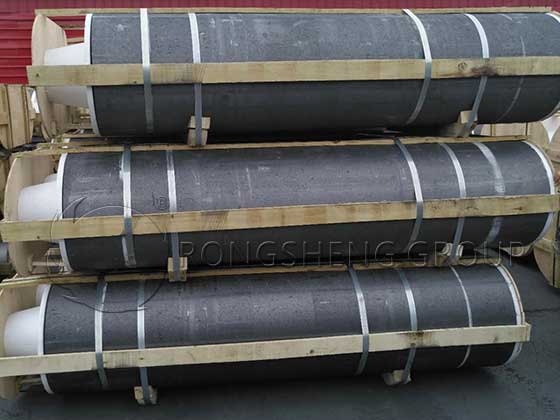
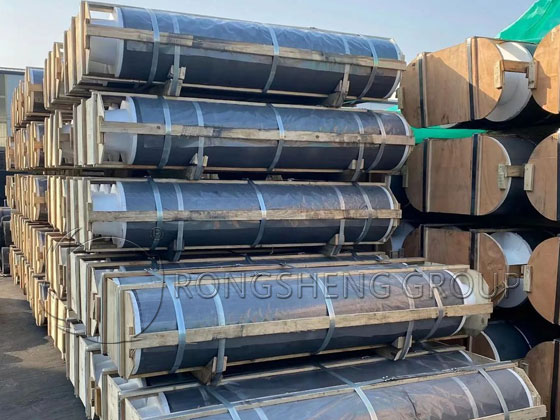
    • Global shipping – Packaged in wooden crates with steel strapping. Sea-worthy containers.
Quality RP/HP/UHP Graphite Electrodes

Common Misconceptions About Graphite Electrodes

Misconception 1: “All graphite electrodes are essentially the same.”
False. Resistivity varies by nearly 100% between RP and UHP grades. That’s not a minor difference—it’s the difference between stable arcs and flickering power.

Misconception 2: “Why are electrodes made of graphite? Because it’s cheap.”
Partly true, but incomplete. Graphite isn’t cheap to produce (the graphitization process alone consumes significant energy). It’s used because no other material works. Cost is secondary to functionality.

Misconception 3: “MC graphite electrode is just marketing terminology.”
Not when properly defined. MC fills a real gap between RP and HP performance. The key is finding suppliers who publish actual specifications, not just labels.

Quality Manufacturing RP/HP/UHP Graphite Electrodes

Understanding why are electrodes made of graphite helps you appreciate the engineering behind every ton of steel. But knowledge alone doesn’t reduce your electrode consumption. That requires quality manufacturing from proven rp graphite electrode suppliers and the right grade selection—whether RP, MC, or higher.

Stop settling for inconsistent electrode performance. Contact Rongsheng today for RP or MC graphite electrode samples, complete specifications, and a consumption reduction proposal tailored to your furnace.

Electric Arc Furnace Graphite Electrodes | Rongsheng Electrode Graphite Experts

How do Electric Arc Furnace Graphite Electrodes Transform Melt Shops? Without graphite, electric arc furnace steelmaking would simply stop. That statement isn’t hyperbole—it’s physics. Every ton of scrap steel melted in an EAF depends on a controlled electric arc passing through high-density conductive columns. And those columns? They are electric arc furnace graphite electrodes—the only material that can simultaneously conduct thousands of amps, withstand 3000°C+ temperatures, and survive rapid thermal cycling.

Rongsheng Graphite Electrode Manufacturer

At Rongsheng Graphite Electrodes Manufacturer, we don’t just produce graphite. We engineer electrode graphite specifically for the brutal environment of modern melt shops. This article explains why quality differences in graphite matter, how to match electrode properties to furnace demands, and what separates genuine manufacturing from commodity trading.

The Unique Role of Graphite in Electric Arc Furnaces

Many materials conduct electricity. Few can handle an arc furnace. Copper would melt. Steel would oxidize. Ceramics would crack from thermal shock. Graphite, however, possesses a rare combination of properties:

    • Sublimation point above 3600°C – It doesn’t melt; it transitions directly from solid to gas.
    • Low thermal expansion (CTE ~1.5–4.5 × 10⁻⁶/K) – Minimal dimensional change during rapid heating and cooling.
    • High electrical conductivity (resistivity as low as 5.0 µΩ·m for UHP grades) – Efficient power delivery.
    • Machinability – Precision threading for column assembly.

But not all electric arc furnace graphite electrodes perform identically. The differences lie in raw material selection, forming methods, and graphitization cycles. A cheap electrode might work for a few heats. A properly manufactured one lasts through hundreds.

Electrode Graphite Grades: Matching Performance to Furnace Power

The term electrode graphite covers a spectrum of grades. Choosing the wrong grade for your furnace transformer is like putting diesel in a gasoline engine—it will work briefly, then fail expensively.

Ultra-High Power (UHP) Graphite:

    • Resistivity: ≤ 5.8 µΩ·m
    • Flexural strength: ≥ 10.5 MPa
    • CTE: ≤ 1.5 × 10⁻⁶/K
    • Application: Large EAFs (>100 tons) with transformer ratings >30 MVA, ultra-high-power ladle furnaces

High Power (HP) Graphite:

    • Resistivity: 6.5–7.5 µΩ·m
    • Flexural strength: ≥ 9.5 MPa
    • CTE: 2.0–2.5 × 10⁻⁶/K
    • Application: Mid-sized EAFs (40–100 tons), standard ladle refining furnaces

Regular Power (RP) Graphite:

    • Resistivity: 8.0–9.0 µΩ·m
    • Application: Small EAFs (<40 tons), submerged arc furnaces for ferroalloys

Rongsheng produces all three grades. Our recommendation always starts with your transformer capacity, scrap quality, and target tap-to-tap time. Over-specifying wastes money. Under-specifying destroys electrodes.

electric arc furnace graphite electrodes

What Happens Inside an Electric Arc Furnace During Melting?

To understand why electric arc furnace graphite electrodes fail, you must understand the environment they operate in. During a typical melt cycle (45–60 minutes), each electrode experiences:

    1. Startup thermal shock – Room temperature to 2500°C arc tip in under 60 seconds.
    2. Mechanical vibration – Scrap collapse causes sudden column impacts.
    3. Oxidation – Air infiltration burns sidewalls at rates up to 15% per hour above 600°C.
    4. Thermal cycling – Multiple heating/cooling cycles per day (often 3–5 heats per electrode set).

Failure modes directly trace to manufacturing quality:

    • Longitudinal cracking → Poor needle coke quality or rushed graphitization.
    • Nipple breakage → Incorrect thread geometry or mismatched thermal expansion.
    • Excessive sidewall consumption → Low bulk density or inadequate anti-oxidation treatment.

Quality electrode graphite resists all four stressors. Generic graphite fails at least one.

Rongsheng’s Manufacturing Process for Electrode Graphite

We control every stage of production. That’s the only way to guarantee consistency in electric arc furnace graphite electrodes.

Raw Material Selection: Only calcined needle coke from certified sources. For UHP grade, we use premium coke with specific crystallite orientation (Lc > 30 nm, d002 < 0.337 nm). Impurities (ash content) kept below 0.3%.

Forming: Isostatic pressing for diameters above 500mm; vibration forming for 300–500mm. Pressure exceeds 15,000 psi to eliminate internal voids. Green density minimum 1.75 g/cm³.

Baking: 28-day cycle in oxygen-free ring furnaces. Temperature rises from ambient to 1200°C at precisely controlled rates. Baked density reaches 1.62–1.68 g/cm³.

Impregnation: Pitch impregnation under vacuum (0.06 MPa absolute pressure) fills remaining porosity. UHP grades receive two impregnation cycles. Resulting bulk density: 1.72–1.76 g/cm³.

Graphitization: Acheson furnace treatment at 2800–3000°C for 15–25 days. This converts amorphous carbon into crystalline graphite. Resistivity drops by 40–50% during this stage.

Machining: CNC lathes cut threads to ISO 7811 standards. Thread taper tolerance: ±0.1mm over 300mm length. Each nipple is match-marked to its electrode.

Quality Verification: Ultrasonic testing (100% of production) detects internal fissures >1mm. Electrical resistivity measured at four points per electrode. Flexural strength tested on sample bars from each batch.

Common Misconceptions About Electric Arc Furnace Graphite Electrodes

Myth 1: All electrode graphite is basically the same.
False. Resistivity can vary by 200% between RP and UHP grades. CTE varies by 300%. These aren’t minor differences—they determine whether your electrode column survives a power surge.

Myth 2: Larger diameter always means better performance.
Not necessarily. Diameter must match transformer capacity. A 500mm electrode on a 20 MVA furnace will underperform because current density is too low to maintain arc stability.

Myth 3: Anti-oxidation coating is optional.
No. Above 600°C, uncured graphite oxidizes at 0.5–1.5 mm per hour. A 450mm electrode loses 10mm of diameter after 10 hours without coating. That’s a 20% cross-section reduction.

Myth 4: Cheaper electrodes save money.
Rarely. Low-cost electric arc furnace graphite electrodes typically show 15–25% higher specific consumption (kg per ton of steel). They also break more frequently, causing unplanned downtime. The total cost of ownership almost always favors quality.

Low-Cost Electric Arc Furnace Graphite Electrodes

Real Results from Rongsheng’s Electrode Graphite

An EAF operator processing 120 tons per heat switched from a low-cost supplier to Rongsheng UHP grade Electrode. Results over six months:

    • Electrode consumption: 1.95 kg/t → 1.52 kg/t (22% reduction)
    • Breakage incidents: 9 per quarter → 2 per quarter
    • Power-on time: reduced by 7 minutes per heat

Another customer—a stainless steel mill using HP grade—reported 11% lower nipple-related failures after switching to Rongsheng’s precision-machined threads.

These improvements don’t require furnace modifications. They only require better electrode graphite.

Why Rongsheng?

We are not traders. We are not resellers. Rongsheng is a full-process manufacturer of electric arc furnace graphite electrodes with:

    • Annual production capacity: 60,000 metric tons
    • ISO 9001:2015 certified quality system
    • In-house needle coke storage (3-month buffer inventory)
    • Technical team available for on-site furnace analysis
    • Typical lead time: 25 days for custom orders; 10 days for standard diameters

We don’t promise the lowest price. We promise the lowest total cost per ton of steel produced.

Rongsheng Electric Arc Furnace Graphite Electrodes for Sale

Your electric arc furnace is a precision tool. It deserves electric arc furnace graphite electrodes that match its capabilities. Generic graphite introduces variables you don’t need—variable consumption, variable breakage, variable power input. Rongsheng eliminates those variables through controlled manufacturing from coke to the finished column.

Stop guessing with generic electrode graphite. Contact Rongsheng today for a furnace-specific electrode recommendation and a side-by-side consumption comparison.

450mm UHP Graphite Electrode Manufacturer | HP 450mm Electrodes Experts

Insights from a Leading 450mm UHP Graphite Electrode Manufacturer. In modern electric arc furnace (EAF) steelmaking, electrode diameter directly impacts melting efficiency. For years, 350mm and 400mm electrodes dominated the market. But today, the industry is shifting—rapidly and decisively—toward larger diameters. At Rongsheng, we’ve watched this transition accelerate. As a specialized 450mm UHP graphite electrode manufacturer, we’ve engineered our production lines to meet the specific demands of high-power and ultra-high-power melting environments.

High-Power Graphite Electrodes

But why 450mm? And what separates a reliable HP 450mm graphite electrode manufacturer from the rest? Let’s break down the technical and economic realities.

The 450mm Electrodes Advantage: More Than Just Size

A 450mm electrode isn’t simply a thicker rod. It’s a complete operational upgrade. Compared to a 400mm UHP electrode, a 450mm UHP electrode offers approximately 26% larger cross-sectional area. This translates into three critical benefits:

    1. Higher current-carrying capacity – You can push more power through the furnace without overheating the electrode column.
    2. Lower thermal stress per unit area – Heat distribution becomes more uniform, reducing longitudinal cracking.
    3. Fewer electrode breaks – Greater mechanical strength means less downtime for replacements.

For EAF operators running 100-ton-plus furnaces, switching to 450mm electrode often reduces specific electrode consumption by 8–12%. That’s a direct cost saving. And when you source from a dedicated 450mm UHP graphite electrode manufacturer like Rongsheng, those savings become predictable.

UHP vs. HP: Matching Grade to Your Furnace

Not all 450mm electrodes perform the same. The grade matters—profoundly.

Ultra-High Power (UHP):
Designed for large EAFs with transformer ratings above 30 MVA. UHP grades undergo graphitization at temperatures exceeding 3000°C, producing a highly ordered crystalline structure. Electrical resistivity drops below 5.8 µΩ·m. Flexural strength exceeds 10.5 MPa. These are the workhorses of modern mini-mills.

High Power (HP):
Ideal for mid-sized furnaces (40–80 tons) with transformer ratings between 15–30 MVA. HP grades offer resistivity around 7.0 µΩ·m and flexural strength above 9.0 MPa. They’re cost-effective for operations that don’t require maximum power density.

As both a 450mm UHP graphite electrode manufacturer and one of the reliable hp 450mm graphite electrode manufacturers, Rongsheng produces both grades. We don’t push one over the other. Instead, we analyze your furnace parameters—current, tap weight, scrap density—and recommend the grade that minimizes your total cost per ton of steel.

Graphite Electrode for Sale

What to Look for in a 450mm Electrode Supplier

The market has seen an influx of traders and re-sellers claiming to be manufacturers. Authentic manufacturing matters because electrode performance is determined by five internal factors:

    • Needle coke quality – Only premium calcined needle coke from specific sources yields the low CTE (coefficient of thermal expansion) required for 450mm UHP electrode.
    • Forming pressure – Isostatic pressing or vibration forming? At 450mm diameter, isostatic pressing delivers uniform density across the entire cross-section. Rongsheng uses 20,000-ton isostatic presses.
    • Graphitization cycle – A rushed cycle creates micro-cracks. Our LWG furnace runs a 25-day cycle to ensure full crystalline development.
    • Threading precision – 450mm electrodes rely on nipple connections. Thread tolerance below 0.2mm prevents loosening under thermal cycling.
    • Quality control – Every electrode is ultrasonically tested for internal fissures before shipping.

Many hp 450mm graphite electrode manufacturers skip one or more of these steps. Rongsheng doesn’t. That’s why our electrodes achieve a breakage rate below 0.8%—half the industry average.

Common Problems with Undersized or Low-Quality 450mm Electrodes

We see the same complaints repeatedly from EAF operators who switched from smaller diameters but kept the same supplier:

    • Column slippage – Poor nipple fit causes joints to loosen after 5–6 heats.
    • Oxidation rates above 15% per 24 hours – Inadequate coating or low-density graphite accelerates sidewall burning.
    • Inconsistent resistivity – One electrode draws 48 kA, the next draws only 42 kA, causing power imbalance.

These issues aren’t inherent to the 450mm format. They’re manufacturing defects. And they disappear when you work with a genuine 450mm UHP graphite electrode manufacturer that controls every production stage—from green coke to finished product.

Rongsheng’s Production Approach for 450mm Electrodes

Our facility operates on a closed-loop quality system. For 450mm UHP electrodes, we:

    1. Source needle coke from certified suppliers (UHP-grade requires specific calcination parameters).
    2. Extrude using a 5,500-ton vacuum extruder to eliminate internal voids.
    3. Bake in 36-chamber ring furnaces with a 28-day temperature ramp from 200°C to 1200°C.
    4. Impregnate twice with coal tar pitch to achieve bulk density above 1.72 g/cm³.
    5. Graphitize in Acheson furnaces with a proprietary power profile that prevents thermal shock.
    6. Machine threads on CNC lathes with laser-verified geometry.
    7. Ship with anti-oxidation coating (our own formula, tested at 1600°C for 8 hours).

For hp 450mm graphite electrode manufacturers, the process is similar but uses slightly lower-grade coke and single impregnation. The result is a cost-effective electrode that still outperforms generic imports.

450 Graphite Electrode Manufacturer UHP/HP/RP

Real-World Performance Data

A steelmaker producing rebar switched from 400mm UHP to Rongsheng’s 450mm UHP. Results over three months:

    • Average power-on time reduced from 58 minutes to 51 minutes.
    • Electrode consumption dropped from 1.7 kg/t to 1.48 kg/t.
    • Breakage incidents: zero.

Another, using HP grade for stainless steel melting, reported a 9% reduction in joint-related failures after switching from a different HP 450mm graphite electrode manufacturer to Rongsheng.

Why Choose Rongsheng Over Other 450mm Electrode Manufacturers?

Most suppliers will sell you a 450mm electrode. Few can explain its internal structure or guarantee its performance. Here’s what makes Rongsheng different:

    • Direct manufacturing – No trading markup. No third-party quality variance.
    • ISO 9001:2015 certified – Traceability from raw material lot to final shipment.
    • Stock availability – 450mm UHP and HP diameters always in inventory. Lead time: 20–25 days for custom orders.
    • Technical support – Our engineers calculate optimal nipple torque and electrode column design for your specific furnace.

We don’t claim to be the cheapest. We claim to be the most consistent. And in EAF steelmaking, consistency is profit.

Rongsheng 450mm electrodes Manufacturer

The shift to 450mm electrodes is inevitable for furnaces above 80 tons. But the diameter alone doesn’t deliver value—the manufacturing quality does. Whether you need UHP for high-intensity melting or HP for balanced cost-performance, Rongsheng operates as both a specialized 450mm UHP graphite electrode manufacturer and a trusted HP 450mm graphite electrode manufacturer.

Ready to reduce your electrode consumption and furnace downtime with genuine 450mm UHP or HP electrodes? Contact Rongsheng today for a customized quote and technical specification sheet.

350mm UHP Graphite Electrode for Arc Furnace Efficiency by Rongsheng

350mm UHP Graphite Electrode for Arc Furnace: Performance, Manufacturing, and Application Value. In electric arc furnace (EAF) operations, graphite electrodes are among the most influential consumables affecting productivity, energy efficiency, and operational stability. As furnace technology evolves toward higher power input and shorter melting cycles, the demand for ultra-high-power electrodes continues to grow. Among commonly used specifications, the 350mm UHP graphite electrode for arc furnace plays a key role in medium to large EAF systems that require both high current capacity and stable arc performance.

From the perspective of Rongsheng Graphite Electrode Manufacturer, this article focuses on how UHP graphite electrodes, particularly the 350mm size, support modern EAF operations, how they differ from lower grades, and why choosing the right EAF graphite electrode supplier matters for long-term furnace efficiency.


uhp graphite electordes for Arc Furnaces

Why 350mm UHP Graphite Electrodes Matter in EAF Operations

The 350mm diameter electrode is widely applied in electric arc furnaces operating under ultra-high-power conditions. These furnaces demand electrodes capable of carrying high current densities while maintaining mechanical strength and thermal stability.

Unlike smaller electrodes used in lower-power systems, a 350mm UHP graphite electrode must handle intense electrical loads, frequent temperature fluctuations, and mechanical stresses caused by arc movement and scrap charging. For these reasons, UHP grade electrodes are often preferred over HP or RP grades in furnaces seeking higher productivity and reduced melting time.


Core Performance Advantages of 350mm UHP Graphite Electrode for Arc Furnace

High Current-Carrying Capacity

One of the defining features of a 350mm UHP graphite electrode for arc furnace use is its ability to conduct large electrical currents with minimal resistive loss. Lower electrical resistivity allows the electrode to transmit power efficiently, supporting faster scrap melting and higher furnace throughput.

Excellent Thermal Shock Resistance

Electric arc furnaces experience rapid heating and cooling cycles. UHP graphite electrodes are engineered to withstand these sudden temperature changes without cracking or spalling, reducing the risk of unexpected electrode failure.

Strong Mechanical Stability

During EAF operation, electrodes are exposed to vibration, bending stress, and impact from scrap material. The dense internal structure of UHP graphite electrodes provides superior mechanical strength, helping maintain structural integrity throughout the melting process.

Stable Arc Performance

Arc stability is essential for controlled melting and energy efficiency. A high-quality EAF graphite electrode supports consistent arc formation, reducing power fluctuation and improving heat transfer within the furnace.


Manufacturing Focus Behind Reliable UHP Graphite Electrodes

The performance of UHP graphite electrodes depends heavily on manufacturing quality. From raw materials to final inspection, each step contributes to the electrode’s reliability in arc furnace applications.

Premium Raw Material Selection

UHP graphite electrodes require carefully selected petroleum coke and needle coke with low impurity levels. Needle coke quality is especially critical, as it directly affects electrical conductivity and thermal resistance.

Precision Forming and Baking

Uniform density is essential in a 350mm electrode. Advanced forming techniques ensure even compaction, while multiple baking stages strengthen the structure and reduce internal porosity.

High-Temperature Graphitization

Graphitization at extremely high temperatures transforms carbon material into crystalline graphite. This process significantly enhances conductivity and heat resistance, defining the UHP grade’s performance characteristics.

Accurate Machining and Inspection

After graphitization, electrodes are machined to precise tolerances, particularly at the nipple connection. Strict inspection procedures verify resistivity, density, strength, and dimensional accuracy before delivery.


Application of Graphite Electrodes for Steelmaking

Application Value of 350mm UHP Graphite Electrodes in EAF Systems

Primary Steelmaking in Electric Arc Furnaces

In EAF steelmaking, 350mm UHP graphite electrodes deliver the power needed to melt scrap efficiently. Their high current capacity allows operators to increase transformer power input while maintaining arc stability, improving overall productivity.

High-Intensity Melting Operations

Steel plants aiming to shorten tap-to-tap time often operate furnaces at higher power densities. UHP graphite electrodes support this approach by tolerating greater electrical and thermal stress without compromising service life.

Ladle Furnace and Secondary Refining

Although primarily associated with EAFs, UHP graphite electrodes are also used in ladle furnaces where precise temperature control is required. Stable heating contributes to better alloy adjustment and improved steel quality.

Alloy and Special Steel Production

Special steels often require higher melting temperatures and longer refining times. UHP graphite electrodes provide the durability and electrical stability necessary for these demanding production conditions.


Economic Impact of Choosing the Right EAF Graphite Electrode

Selecting the appropriate electrode grade influences not only furnace performance but also overall operating cost. While UHP graphite electrodes typically have a higher unit price, they often reduce total electrode consumption, minimize breakage, and lower energy usage.

For furnaces operating at ultra-high power, the use of 350mm UHP graphite electrodes can result in lower cost per ton of steel produced. Reduced downtime and improved furnace stability further enhance economic benefits over the long term.


Role of Graphite Electrode Suppliers in Furnace Performance

Reliable graphite electrode suppliers contribute more than product delivery. They provide technical support, consistent quality, and supply stability, all of which are critical for continuous furnace operation.

Professional suppliers help customers match electrode specifications with furnace parameters, including transformer capacity and operating power. This ensures that the selected EAF graphite electrode performs optimally under real operating conditions.


Rongsheng’s Approach as a Graphite Electrode Manufacturer

As an experienced manufacturer of UHP graphite electrodes, Rongsheng focuses on product consistency, manufacturing reliability, and customer-oriented service. With a physical factory, advanced production equipment, and strict quality control systems, Rongsheng supplies graphite electrodes to steel and metallurgical industries worldwide.

Rongsheng’s 350mm UHP graphite electrodes are designed to support high-power EAF operations by offering stable performance, long service life, and predictable consumption rates. This helps customers optimize furnace efficiency and reduce overall operating costs.


Industry Outlook for UHP Graphite Electrodes

As electric arc furnace technology continues to expand globally, demand for high-performance UHP graphite electrodes is expected to grow. Increased emphasis on energy efficiency, recycling, and low-emission steelmaking further strengthens the role of reliable EAF graphite electrodes in modern industry.

Manufacturers capable of delivering consistent quality and technical support will play a key role in supporting this transition.


Rongsheng UHP Graphite Electrode for Arc Furnace

The 350mm UHP graphite electrode for arc furnace applications represents a critical component in modern EAF operations. With high current capacity, strong thermal shock resistance, and stable arc performance, uhp graphite electrodes enable steel producers to operate at higher efficiency and productivity.

Choosing a trusted EAF graphite electrode manufacturer and supplier is essential for achieving long-term operational stability and cost control in high-power furnace environments.

For steel plants and metallurgical enterprises seeking reliable 350mm UHP graphite electrodes for arc furnace operations, Rongsheng offers proven manufacturing capability, consistent quality, and professional technical support.
Contact Rongsheng Graphite Electrode Manufacturer today to discuss your furnace requirements and discover how high-performance UHP graphite electrodes can enhance your production efficiency and operational reliability.

Dia 550mm Graphite Electrode Manufacturer Explains Real Uses

Dia 550mm Graphite Electrode Manufacturer. In recent years, online searches for graphite electrodes have expanded beyond industrial buyers. Alongside professional queries, unexpected terms such as “graphite electrode minecraft” have begun appearing in search results. While this phrase originates from gaming communities, it highlights a broader issue: many people encounter graphite electrodes first online, without understanding their real industrial significance.

graphite electrodes manufacturer

From the perspective of a professional dia 550mm graphite electrode manufacturer, graphite electrodes are not virtual tools or game materials. They are critical consumables used in some of the world’s most demanding high-temperature industries. This article explains what large-diameter graphite electrodes actually are, how graphite electrodes manufacturers produce them, where they are used, and why real-world performance differs greatly from simplified digital representations.


Understanding Dia 550mm Graphite Electrodes

A 550mm graphite electrode belongs to the large-diameter category, typically used in high-capacity electric arc furnaces (EAFs). These furnaces operate under extreme electrical loads and thermal conditions, requiring electrodes with excellent conductivity, mechanical strength, and thermal shock resistance.

From a manufacturing standpoint, producing a 550mm electrode is significantly more complex than producing smaller sizes. Uniform density, internal structural stability, and precise machining become increasingly difficult as diameter increases. This is why not all graphite electrodes manufacturers are capable of producing consistent, high-quality dia 550mm graphite electrodes.

For steel plants and metallurgical enterprises, choosing the right dia 550mm graphite electrode manufacturer directly affects furnace stability, electrode consumption rate, and overall production efficiency.


Manufacturing Challenges Faced by Graphite Electrodes Manufacturers

Raw Material Control

Large-diameter electrodes require carefully selected raw materials. High-quality petroleum coke and needle coke are essential to achieve low electrical resistivity and strong thermal resistance. Any inconsistency in raw materials can lead to internal defects that become critical under ultra-high-power furnace conditions.

Density Uniformity

One of the most difficult tasks in producing dia 550mm graphite electrodes is maintaining uniform density throughout the electrode body. Uneven density may cause localized overheating, internal cracking, or premature electrode failure during operation.

High-Temperature Graphitization

Graphitization transforms carbon material into crystalline graphite at temperatures above 3000°C. For large electrodes, precise temperature control is vital. Professional graphite electrodes manufacturers invest heavily in advanced furnaces and process control to ensure complete and even graphitization.

Precision Machining

After graphitization, dia 550mm graphite electrodes require accurate machining, especially at the nipple connection. Any deviation in thread precision may affect electrical contact and mechanical stability during furnace operation.


Graphite Electrodes for Sale

Application Reality of Dia 550mm Graphite Electrodes

Electric Arc Furnace Steelmaking

In large EAFs, dia 550mm graphite electrodes are used to deliver massive electrical currents into the furnace. Their role is to generate a stable arc that melts scrap steel efficiently. Unlike simplified online depictions, real electrodes must endure continuous arc impact, oxidation, vibration, and mechanical stress.

Ultra-High-Power Furnace Operations

Many modern steel plants operate furnaces at higher power densities to shorten melting cycles. Large-diameter electrodes support this strategy by carrying higher current loads while maintaining arc stability and structural integrity.

Metallurgical and Industrial Furnaces

Beyond steelmaking, dia 550mm graphite electrodes are used in silicon metal furnaces, ferroalloy production, and other metallurgical processes requiring long-term high-temperature operation. These applications demand durability rather than the symbolic function often associated with “graphite electrode minecraft” searches.


Graphite Electrode Minecraft: Digital Curiosity vs. Industrial Reality

The keyword “graphite electrode minecraft” often reflects curiosity rather than industrial knowledge. In gaming environments, materials are simplified, instantly replaceable, and unaffected by real-world physics. In contrast, industrial graphite electrodes are engineered products where every parameter—resistivity, density, length, and diameter—directly impacts safety, efficiency, and cost.

From a manufacturer’s viewpoint, this contrast highlights the importance of education. Real graphite electrodes are not decorative or optional components. They are consumables that influence power consumption, furnace lifespan, and production stability.

Understanding this difference helps procurement teams, engineers, and even newcomers to the industry appreciate why professional graphite electrodes manufacturers invest so much in technology, testing, and quality control.


How a Dia 550mm Graphite Electrode Manufacturer Adds Value

Consistent Quality Output

Reliable manufacturers ensure that every batch of dia 550mm graphite electrodes meets strict internal standards. Consistency reduces operational risks and allows furnace operators to optimize power settings with confidence.

Technical Matching Support

Different furnaces require different electrode grades. Professional manufacturers provide technical guidance to help customers select suitable specifications based on transformer capacity, furnace design, and production targets.

Long-Term Cost Efficiency

Although large-diameter graphite electrodes represent a significant investment, high-quality products reduce breakage, lower consumption rates, and improve melting efficiency. Over time, this translates into lower cost per ton of output.

Global Supply Capability

Experienced graphite electrodes manufacturers maintain stable production capacity and international logistics systems, supporting customers across multiple regions and industries.


Rongsheng’s Manufacturing Perspective

As a professional dia 550mm graphite electrode manufacturer, Rongsheng integrates raw material control, advanced production equipment, and strict quality inspection into every stage of manufacturing. With a physical factory and long-term export experience, Rongsheng supplies graphite electrodes to steel, metallurgy, and industrial furnace operators worldwide.

Rather than focusing solely on size or grade, Rongsheng emphasizes performance reliability, service life, and customer support. This approach allows customers to achieve stable furnace operation even under increasingly demanding production conditions.


Industry Outlook for Large-Diameter Graphite Electrodes

As global steelmaking shifts toward higher efficiency and lower emissions, electric arc furnaces continue to expand. This trend increases demand for large-diameter graphite electrodes capable of supporting higher power input and shorter melting cycles.

At the same time, market awareness is expanding beyond traditional buyers, sometimes driven by unrelated search terms such as graphite electrode minecraft. This creates an opportunity for professional manufacturers to communicate real product value more clearly and differentiate industrial expertise from digital abstraction.


Conclusion

The role of a dia 550mm graphite electrode manufacturer goes far beyond supplying a large carbon product. It involves mastering complex production processes, ensuring consistent performance, and supporting customers in high-risk, high-temperature environments.

While terms like graphite electrode minecraft may attract casual attention, real industrial graphite electrodes are engineered tools that power modern steelmaking and metallurgical industries. Choosing experienced graphite electrodes manufacturers is essential for achieving safe operation, high productivity, and long-term cost control.

For steel plants, metallurgical enterprises, and procurement teams seeking a reliable dia 550mm graphite electrode manufacturer, Rongsheng offers proven manufacturing capability, stable supply, and professional technical support.
Contact Rongsheng today to discuss your furnace requirements and discover how high-quality graphite electrodes can improve efficiency, reliability, and overall production performance.

Choosing a Reliable UHP Graphite Electrode 300mm Manufacturer

UHP Graphite Electrode 300mm Manufacturers: Manufacturing Strength, Performance, and Supplier Value. In high-temperature industrial furnaces, especially electric arc furnaces (EAFs), graphite electrodes are among the most critical consumables. Their quality directly affects melting efficiency, energy consumption, and overall production stability. Among various specifications, the UHP graphite electrode 300mm has become a widely used size in small to medium-capacity furnaces that operate under ultra-high-power conditions. As demand for stable, high-efficiency steelmaking grows, the role of professional uhp graphite electrode 300mm manufacturers and dependable graphite electrode suppliers becomes increasingly important.

RS provide High-Power Graphite Electrodes

Rongsheng, as an experienced graphite electrode manufacturer, focuses on delivering consistent quality and reliable supply for global furnace operators. This article discusses the technical features of UHP graphite electrode 300mm, manufacturing considerations, and how professional suppliers add value beyond the product itself.


Why UHP Graphite Electrode 300mm Matters in Modern Furnaces

The 300mm diameter electrode is commonly used in electric arc furnaces with moderate capacity but high power density. These furnaces require electrodes that can carry high current while maintaining structural stability during frequent thermal cycles.

UHP (Ultra High Power) grade electrodes are designed specifically for such conditions. Compared with HP or RP grades, UHP graphite electrodes offer lower electrical resistivity, higher bulk density, and stronger resistance to thermal shock. For furnace operators seeking faster melting, stable arcs, and reduced electrode consumption, the UHP graphite electrode 300mm provides a practical and efficient solution.


Key Performance Characteristics of UHP Graphite Electrode 300mm

High Current-Carrying Capability

One of the defining advantages of UHP graphite electrode 300mm is its ability to withstand high current loads without overheating. Low electrical resistivity allows more power to pass through the electrode efficiently, supporting shorter melting cycles and higher productivity.

Excellent Thermal Shock Resistance

In ultra-high-power operation, electrodes are exposed to rapid temperature changes. UHP 300mm electrodes are engineered to resist cracking and spalling, ensuring stable operation even during aggressive furnace start-ups and power fluctuations.

Strong Mechanical Integrity

The internal structure of UHP graphite electrode 300mm is optimized for strength and uniformity. This helps the electrode endure mechanical stress caused by electrode movement, scrap charging, and arc instability, reducing the risk of breakage.

Consistent Arc Stability

Stable arc performance is essential for controlled melting and reduced energy loss. High-quality UHP electrodes help maintain a smooth and concentrated arc, improving heat transfer efficiency inside the furnace.


Manufacturing Focus of Professional UHP Graphite Electrode 300mm Manufacturers

Not all graphite electrodes deliver the same performance, even if specifications appear similar. The difference often lies in manufacturing expertise and quality control.

Raw Material Selection

Leading uhp graphite electrode 300mm manufacturers carefully select low-sulfur petroleum coke and premium needle coke. For UHP grades, needle coke quality plays a decisive role in conductivity and thermal stability.

Precision Forming and Baking

Uniform density across the electrode body is critical. Advanced forming processes ensure consistent compaction, while controlled baking cycles strengthen the structure and reduce internal defects.

High-Temperature Graphitization

Graphitization transforms carbon into crystalline graphite at extremely high temperatures. This step significantly improves electrical conductivity and thermal resistance, defining the UHP grade performance.

Accurate Machining and Inspection

Precise machining ensures dimensional accuracy and proper nipple connection. Comprehensive inspection, including resistivity, density, and mechanical strength testing, guarantees that each UHP graphite electrode 300mm meets strict performance standards.


Application Value of UHP Graphite Electrode 300mm

Electric Arc Furnace Steelmaking

In EAF steelmaking, UHP graphite electrode 300mm supports high-power input while maintaining arc stability. This allows faster scrap melting and more predictable furnace operation, especially in facilities aiming to improve energy efficiency.

Ladle Furnace Operations

During secondary metallurgy, precise temperature control is essential. UHP 300mm electrodes help maintain consistent heating, supporting alloy adjustment and steel cleanliness without frequent electrode replacement.

Alloy and Special Steel Production

Producing alloy steels often requires higher temperatures and longer holding times. UHP graphite electrodes provide the endurance and electrical reliability needed for these demanding processes.

Industrial and Metallurgical Furnaces

Beyond steelmaking, UHP graphite electrode 300mm is used in furnaces for silicon metal, ferroalloy production, and other metallurgical applications where stable high-temperature performance is required.


The Role of Graphite Electrode Suppliers in Customer Success

Reliable graphite electrode suppliers do more than deliver products. They support customers with technical guidance, stable supply chains, and long-term cooperation.

Consistent Supply and Quality Stability

Professional suppliers maintain stable production capacity and inventory planning, helping customers avoid downtime caused by electrode shortages or inconsistent quality.

Technical Support and Application Advice

Experienced graphite electrode suppliers assist customers in selecting suitable electrode grades and sizes based on furnace conditions, power input, and production targets.

Cost Control and Long-Term Value

High-quality UHP electrodes may have a higher unit cost, but they often reduce overall operating expenses through lower consumption, reduced breakage, and improved energy efficiency.

Global Service Capability

Established suppliers with export experience can support international customers with reliable logistics, standardized packaging, and responsive communication.


Rongsheng’s Position as a Reliable Graphite Electrode Supplier

As one of the professional uhp graphite electrode 300mm manufacturers, Rongsheng integrates manufacturing strength with customer-oriented service. With a physical factory, stable production capacity, and strict quality management systems, Rongsheng supplies graphite electrodes to customers in more than 120 countries.

Rongsheng’s graphite electrodes are widely used in steel, metallurgy, and high-temperature industrial furnaces. By focusing on product consistency, performance reliability, and technical support, the company helps customers achieve longer electrode life, reduced energy consumption, and improved furnace efficiency.


Rongsheng Graphite Electrodes

The UHP graphite electrode 300mm plays a vital role in modern ultra-high-power furnace operations. Its ability to handle high current, resist thermal shock, and maintain structural stability makes it an essential component in efficient steelmaking and metallurgical processes.

Choosing experienced uhp graphite electrode 300mm manufacturers and dependable graphite electrode suppliers is critical for long-term operational success. Manufacturing quality, raw material control, and supplier support all contribute to electrode performance and cost efficiency.

As industrial furnaces continue to pursue higher efficiency and sustainability, high-quality UHP graphite electrodes will remain a key factor in achieving these goals.

For furnace operators and procurement teams seeking a reliable UHP graphite electrode 300mm manufacturer and long-term graphite electrode supplier, Rongsheng offers proven products, stable supply, and professional technical support.
Contact Rongsheng today to discuss your furnace requirements and discover how high-quality UHP graphite electrodes can improve your production efficiency and reduce operating costs.

From HP to UHP: Why 450 mm High-Purity Graphite Electrodes Matter in Steelmaking

HP 450 High Purity Graphite Electrode and UHP 450 Electrode Graphite: Performance, Applications, and Manufacturing Insights. In modern electric arc furnace operations, graphite electrodes are not interchangeable consumables. Diameter, purity, current-carrying capacity, and structural stability directly influence furnace efficiency, energy consumption, and operating cost. Among the commonly used large-size electrodes, the hp 450 high-purity graphite electrode and the UHP 450 electrode graphite occupy a critical position, especially in medium-to-large electric arc furnaces that require stable arcs and high power input.

UHP Graphite Electrode

As an experienced graphite electrode manufacturer, Rongsheng focuses on producing HP and UHP 450 mm graphite electrodes that meet the demanding requirements of today’s steel, alloy, and metallurgical industries. This article introduces their technical characteristics, performance differences, and practical application value, with a clear focus on the keywords provided.


HP 450 and UHP 450 Graphite Electrodes

The number “450” refers to the electrode diameter of 450 mm, a size widely adopted in industrial furnaces that operate under high electrical loads. The difference between HP and UHP grades lies mainly in raw materials, electrical resistivity, current capacity, and thermal shock resistance.

The hp 450 high purity graphite electrode is designed for high-power operation with excellent conductivity and mechanical strength. It offers a balance between cost efficiency and performance, making it suitable for many standard electric arc furnace and ladle furnace conditions.

The uhp 450 electrode graphite, on the other hand, is engineered for ultra-high-power operation. It is capable of carrying higher current densities and enduring more severe thermal and mechanical stresses, particularly in furnaces with shorter melting cycles and higher power input.

Both types play essential roles in industrial furnace systems, but choosing the right grade directly affects productivity and electrode consumption.


Key Characteristics of HP 450 High Purity Graphite Electrode

High Purity and Low Impurities

Purity is a defining feature of HP 450 electrodes. Low ash content and minimal metallic impurities reduce the risk of contamination during melting. This is especially important for steel grades that demand strict chemical control.

Stable Electrical Performance

The hp 450 high purity graphite electrode provides reliable electrical conductivity, allowing consistent arc generation. Stable current transmission helps avoid arc fluctuation, which can otherwise cause uneven melting and increased power loss.

Good Mechanical Strength

With optimized bulk density and controlled grain structure, HP 450 electrodes demonstrate strong resistance to bending and vibration. This is essential in furnaces where electrode movement and mechanical load are frequent.

Cost-Effective for High-Power Furnaces

While not as extreme as UHP grades, HP 450 electrodes perform well under high-power conditions, offering a practical solution for producers seeking durability without excessive cost.


UHP Graphite Electrode
Rongsheng UHP Graphite Electrode Manufacturer

Performance Advantages of UHP 450 Electrode Graphite

Superior Current-Carrying Capacity

The uhp 450 electrode graphite is specifically designed to withstand very high electrical currents. Its lower electrical resistivity allows more power to pass through the electrode without excessive heat buildup.

Excellent Thermal Shock Resistance

Ultra-high-power furnaces experience rapid temperature changes. UHP 450 electrodes are manufactured to resist cracking and spalling under these harsh thermal cycles, ensuring safer and more stable furnace operation.

Longer Service Life in Intensive Operations

Thanks to premium raw materials and advanced graphitization, UHP 450 electrodes generally offer longer service life in high-intensity melting conditions. This reduces electrode consumption per ton of steel produced.

Improved Furnace Efficiency

By supporting higher power input and shorter melting times, UHP 450 electrode graphite helps improve overall furnace productivity and energy utilization.


Manufacturing Focus Behind High-Quality 450 mm Electrodes

Rongsheng’s production of HP and UHP 450 graphite electrodes follows strict quality control from raw material selection to final inspection.

Carefully Selected Raw Materials

High-quality petroleum coke and needle coke are used to ensure purity, uniform structure, and excellent electrical properties. For UHP grades, needle coke content and quality are especially critical.

Controlled Forming and Baking

Advanced forming technology ensures uniform density throughout the electrode body. Multiple baking processes strengthen the internal structure and reduce porosity, laying the foundation for stable performance.

High-Temperature Graphitization

Graphitization at extremely high temperatures transforms carbon materials into well-ordered graphite crystals. This step is essential for achieving low resistivity and high thermal stability, particularly for uhp 450 electrode graphite.

Precision Machining and Quality Inspection

Each electrode undergoes precise machining to meet dimensional tolerances, ensuring proper fit with nipples and electrode columns. Comprehensive testing is conducted to verify density, resistivity, strength, and appearance.


Application Value of HP 450 and UHP 450 Graphite Electrodes

Electric Arc Furnace Steelmaking

In electric arc furnaces, 450 mm graphite electrodes are commonly used in medium to large-capacity systems. HP 450 electrodes perform reliably in standard high-power operations, while UHP 450 electrodes are preferred for furnaces running at higher power levels with faster melting cycles.

Ladle Furnace Refining

During secondary refining, stable arcs and precise temperature control are critical. HP 450 high-purity graphite electrodes help maintain consistent heating, supporting efficient alloy adjustment and steel cleanliness.

Alloy and Special Steel Production

Producing alloy steels often involves higher temperatures and longer holding times. UHP 450 electrode graphite provides the thermal endurance and electrical stability needed for these demanding processes.

Metallurgical and Industrial Furnaces

Beyond steelmaking, HP and UHP 450 electrodes are used in industrial furnaces for silicon metal, ferroalloy production, and other high-temperature metallurgical applications where reliable power input is essential.


Economic and Operational Considerations

Selecting the correct electrode grade is not only a technical decision but also an economic one. HP 450 electrodes offer a favorable balance between performance and cost for many operations. UHP 450 electrodes, while more premium, can significantly reduce power consumption, melting time, and electrode breakage in ultra-high-power furnaces.

Over time, the improved efficiency and reduced downtime provided by UHP 450 electrode graphite can result in lower overall operating costs, especially in large-scale, continuous production environments.


Rongsheng Graphite Electrodes Manufacturer

The hp 450 high-purity graphite electrode and the UHP 450 electrode graphite are both essential solutions for modern high-temperature furnace operations. While HP 450 electrodes deliver reliable performance and cost efficiency for high-power applications, UHP 450 electrodes are designed for extreme conditions where maximum power input and durability are required.

As a professional graphite electrode manufacturer, Rongsheng continues to optimize material selection, manufacturing technology, and quality control to supply HP and UHP 450 graphite electrodes that meet the evolving demands of global industries. These products help customers achieve stable furnace operation, higher productivity, and long-term cost savings in increasingly competitive markets.

For enterprises seeking dependable 450 mm graphite electrodes, understanding the differences between HP and UHP grades is the first step toward better performance and more efficient production.