Prerequisite for the Production of UHP Graphite Electrodes

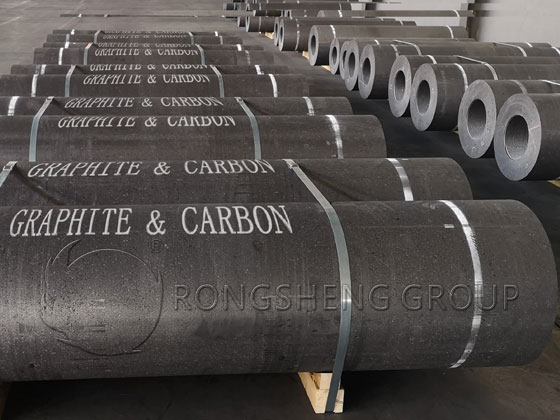
I wrote about Graphite Electrodes Raw Materials Select in my previous article. Today we will talk about choosing high-quality raw materials is a prerequisite for the production of UHP graphite electrodes.

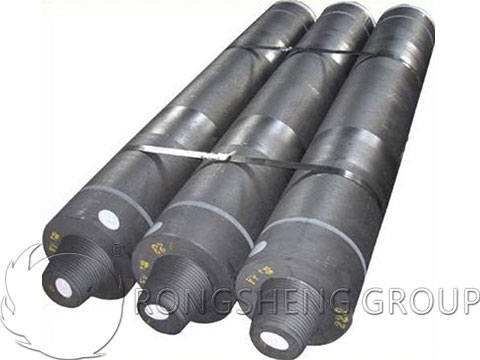
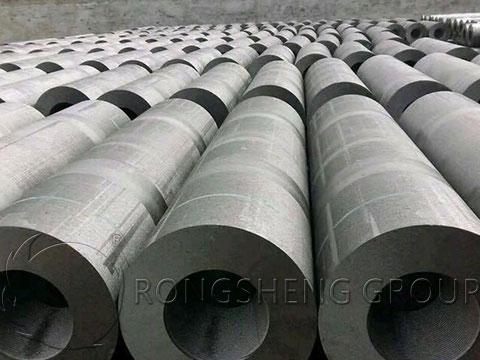
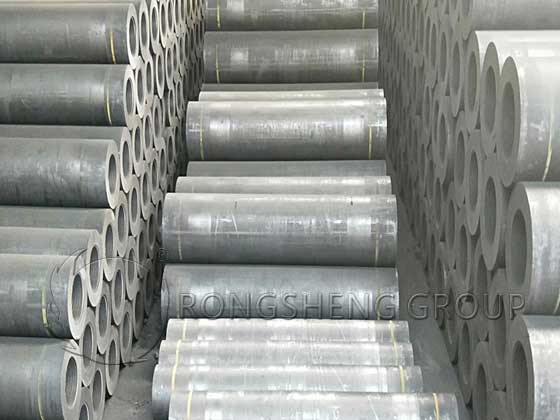
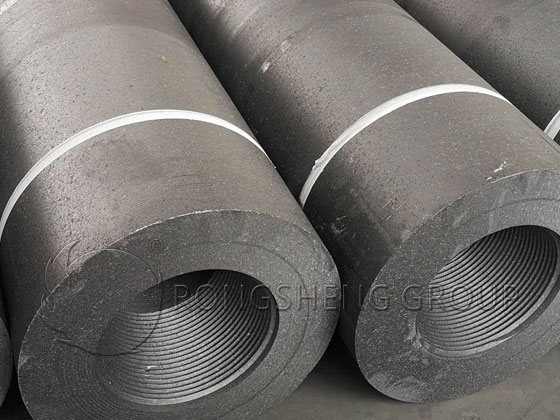
Rongsheng High-Quality UHP Graphite Electrode

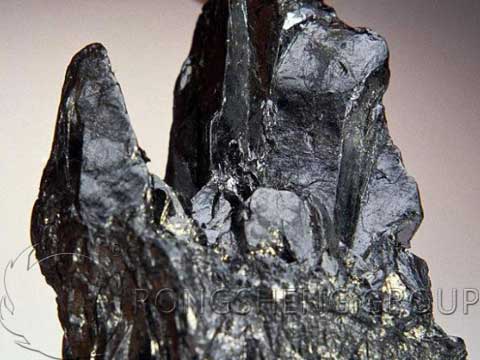
Main Raw Material – Needle Coke

Needle coke must be used as the main raw material to produce ultra-high power graphite electrodes. There are two major types of needle coke, coal-based needle coke, and petroleum-based needle coke, which have a variety of quality specifications. The selection of needle focus depends on the electrode diameter. The larger the electrode diameter, the stricter the quality of needle focus. To study the quality of needle coke, first of all, we must understand the thermal expansion coefficient of the graphitized sample made from this needle coke. The second is the sulfur content and nitrogen content of the needle coke, as well as the actual particle size of the needle coke (the percentage of large particles), whether it can meet the needs of ingredients.

Although the price of coal-based needle coke is lower than that of petroleum-based needle coke, the graphitization performance of coal-based needle coke is also very good. However, the thermal expansion coefficient of coal-based needle coke is generally greater than that of petroleum-based needle coke, so coal-based needle coke is rarely used in large-diameter UHP graphite electrodes. As the carbon product industry in various countries in the world does not have a unified thermal expansion coefficient test method, Japan, Germany, and the United States each have their own test methods. Therefore, it is impossible to make a judgment by just looking at the sample or the data provided by the needle coke factory. It is necessary to collect needle coke samples from various companies and compare the results of the same method in the same laboratory.

Binder – Asphalt

Binder pitch mainly depends on three items: softening point, coking value, and bonding performance (β resin content). The softening point of the binder pitch used by the American Carbon Factory is about 110°C, and the test method is the air cube method. The softening point of the binder asphalt produced by Nippon Steel is 90±3°C and 96±3°C. The test method is the ring and ball method. The softening point of the binder asphalt produced by VFT AG in Germany is 109°C. The coking value of foreign binder asphalt is more than 55%, the beta resin content of Japanese asphalt is about 20%, and the American asphalt is slightly lower. Using this kind of pitch and controlling the proportion of pitch added during the batching, the HP graphite electrode body can reach the volume density requirement without dipping, and the UHP graphite electrode body only needs to be dipped once. Therefore, using high-quality asphalt with a slightly higher softening point and higher coking value as a binder for the production of HP and UHP graphite electrodes is a necessary means to achieve short-process production, that is, one less impregnation and one less roasting.

Impregnant – Pitch

As impregnant pitch, petroleum pitch is mostly used in the United States, and coal pitch is used in Japan and Germany. The common requirement is that the content of quinoline insolubles should be low, the lower the better. The general index is set below 0.5%, because quinoline insoluble matter affects the penetration of pitch into the micropores in the calcined electrode.

Additive

In the production of UHP graphite electrodes, it is also necessary to use appropriate additives to improve the performance of graphite electrodes.

(1) Iron oxide powder. The purpose is to increase the degree of graphitization and alleviate the “crystal swelling” during the graphitization process, which is more effective when using needle coke with higher sulfur content. When using internal tandem graphitization technology for large-diameter electrodes, the heating speed is extremely fast, and adding a small amount of iron oxide powder is beneficial to reduce the cracking waste during the graphitization process.

(2) Stearic acid. The purpose of adding is to reduce the softening point and viscosity of asphalt. This is useful when using asphalt with a higher softening point binder.

(3) Some foreign carbon factories add a small amount of mineral oil that acts as a plasticizer during the kneading process. The purpose of adding is to improve the plasticity of the electrode paste, reduce the friction force when the paste is extruded, and at the same time reduce the extrusion pressure, which is also conducive to improving the internal structure of the green electrode.

As explained in detail above, the selection of high-quality raw materials is a prerequisite for the production of UHP graphite electrodes. Therefore, it is also very important to choose a graphite electrode supplier with a reliable guarantee. Rongsheng Group provides customers with high-quality graphite electrodes. Get detailed information.

Rongsheng RP Graphite Electrodes for Sale in South Africa

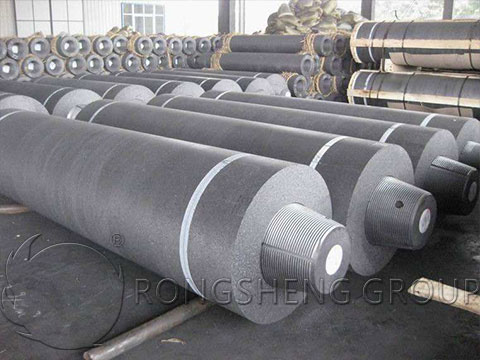
Graphite electrode is a conductor that releases electrical energy in the form of an electric arc to heat and melt the charge. The main raw material for graphite electrode production is petroleum coke. Ordinary power graphite electrodes can be added with a small amount of pitch coke. The sulfur content of petroleum coke and pitch coke cannot exceed 0.5%. Rongsheng graphite electrode manufacturer provides RP graphite electrodes for sale in South Africa. For more detailed information about graphite electrodes, please continue reading.

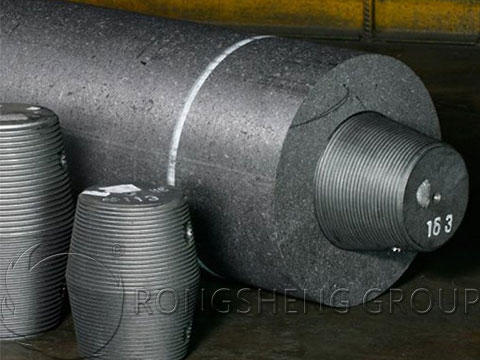
RS High Quality RP Graphite Electrode
RS High-Quality RP Graphite Electrode

RP Graphite Electrodes for Sale

First of all, the raw materials selected for the production of graphite electrodes.

The production of RP graphite electrodes for sale can be used as raw materials for petroleum coke. Produce HP graphite electrodes, using high-quality petroleum coke and needle coke. To produce UHP graphite electrodes, it must use high-quality needle coke as raw materials. To produce high-purity graphite electrodes, a very low ash content petroleum coke is required. In order to improve the lubricity and plasticity of the paste, and to improve the electrical conductivity of the product, a part of graphite chips is also added to the production of graphite electrodes.

Choose a batch of raw materials required for the production of graphite electrodes, and then go through a series of production processes, which may take more than 90 days, and finally complete the production of a batch of graphite electrodes. If you want the finished RP graphite electrode for sale to reach the customer’s hands smoothly, you also need to understand the precautions for transporting the graphite electrode.

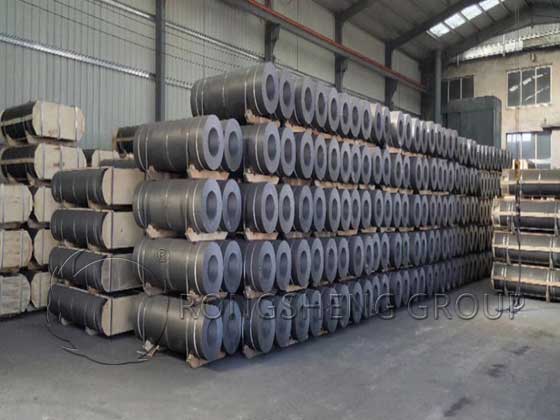
Graphite Electrode Delivery

Secondly, the matters needing attention when transporting graphite electrodes.

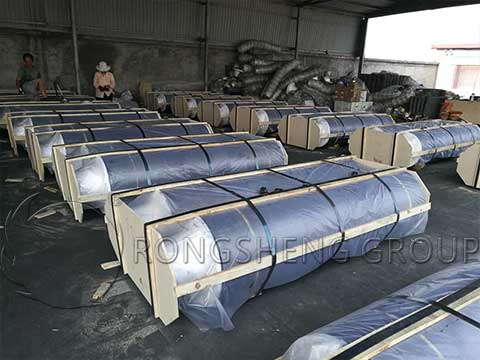
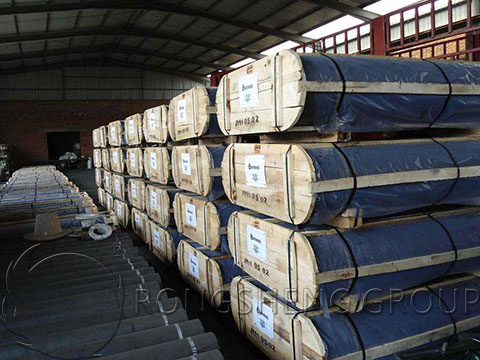
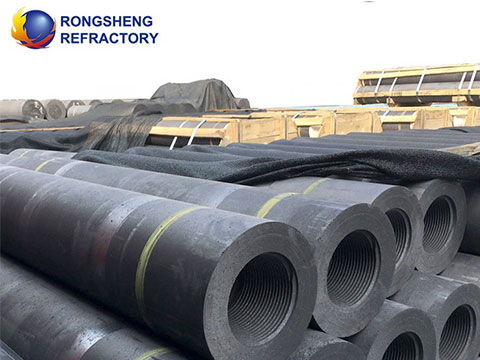
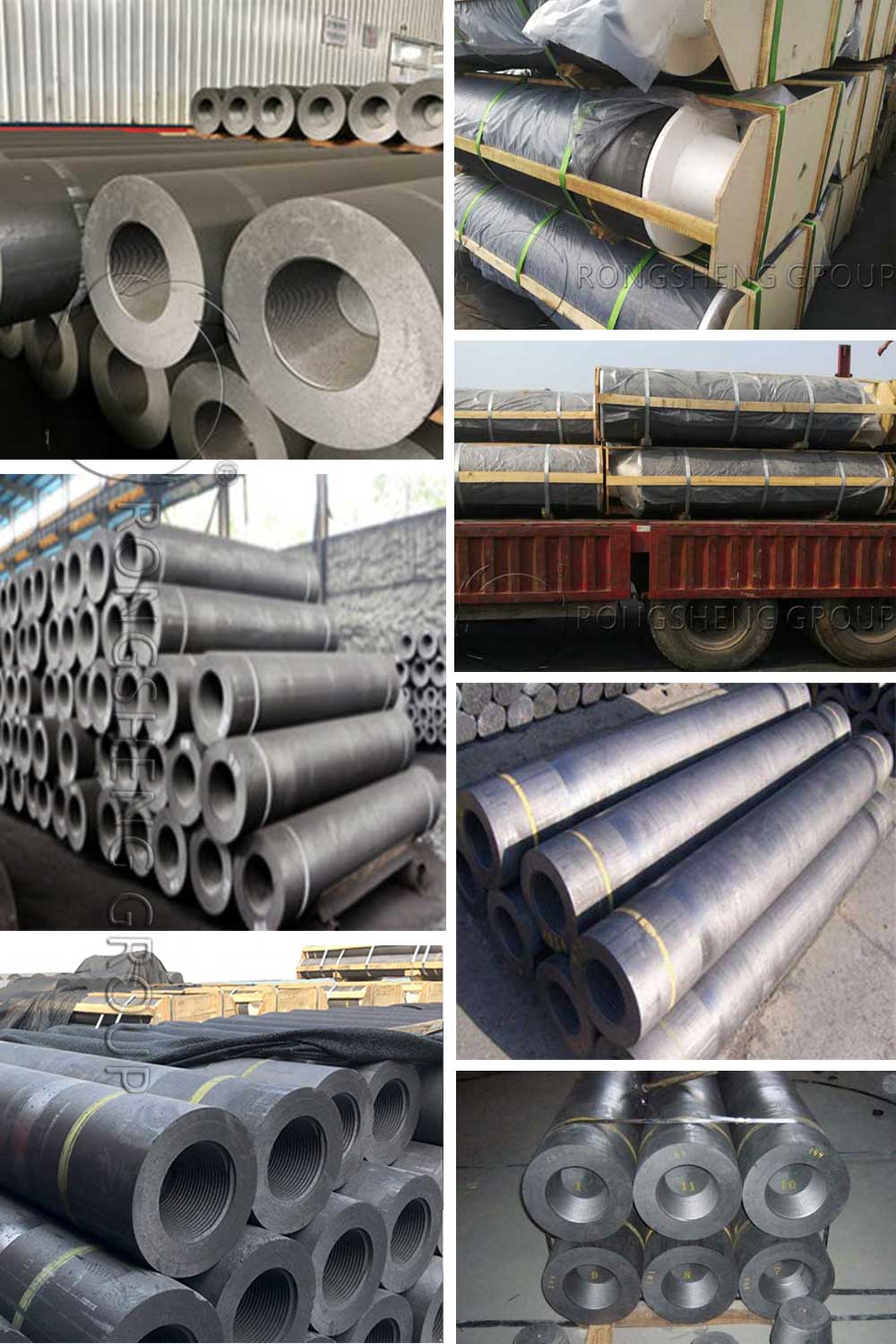
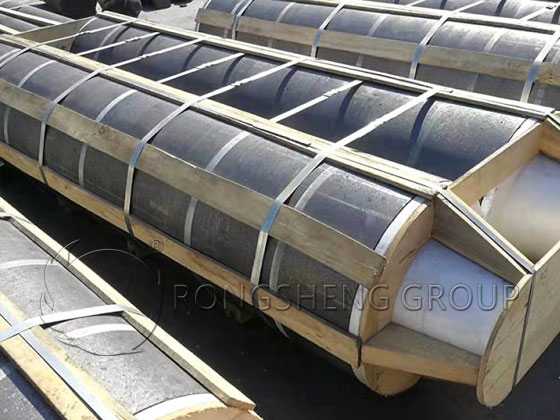
From the Rongsheng graphite electrode manufacturer, Long-distance vehicles transporting graphite electrodes for sale should be covered with a rain-proof tarp to prevent the electrodes from getting wet. When lifting or transporting the graphite electrode, care should be taken to prevent the graphite electrode from being damaged by tilting or slipping. In order to protect the ends and threads of the graphite electrode, the electrode cannot be directly hung with an iron hook. Finally, when loading and unloading the joint box, handle it gently. Prevent the joints from bumping, causing thread damage, and reducing the service life of the graphite electrode.

Rongsheng RP graphite electrode for sale is transported to the customer’s production site or warehouse, and then it can wait to enter the customer’s actual production.

Graphite Electrodes Application

Application of RP Graphite Electrode for Sale

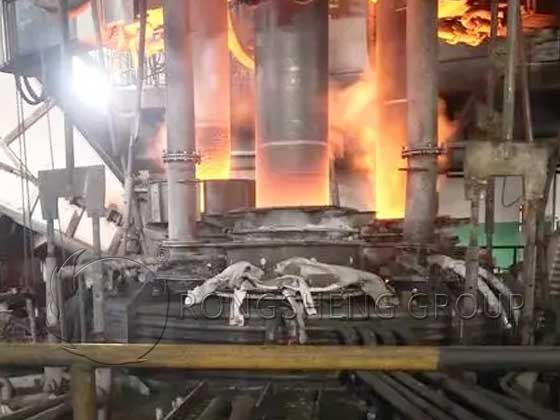
(1) Used in an electric arc steelmaking furnace. Graphite electrode used in steelmaking as an electrode material accounts for about 70-80% of the total consumption of graphite electrodes in China. Electric furnace steelmaking uses research graphite electrodes to introduce working current into the furnace. The powerful current at the lower end of the electrode can generate arc discharge through these gas environments, and use the heat generated by the arc to smelt.

(2) Used in a submerged electric furnace. The submerged electric furnace is mainly used to produce ferroalloys, pure silicon, yellow phosphorus, calcium carbide, and matte. Its production feature is that the lower part of the conductive electrode is buried in the charge. Therefore, in addition to the heat generated by the arc between the electric plate and the charge, heat is also generated by the resistance of the charge when the current passes through the charge.

(3) For resistance furnace. In the production process, the graphitization furnace for graphite material products, the melting furnace for melting glass, and the electric furnace for producing silicon carbide are all resistance furnaces. The material in the resistance furnace is both a heating resistor and an object to be heated.

In the actual graphite electrodes uses, there are some details that need attention.

Detailed Requirements for the Use of Graphite Electrodes

The graphite electrode should be kept dry before use. Check whether the internal thread of the electrode hole is complete. If there is dust falling, you need to use a compressed air gun to clean the surface of the graphite electrode and the internal thread of the hole. There must be no oil or water on the surface of the graphite electrode. Avoid cleaning the graphite electrode with steel wire or metal brush cloth.

In the use of graphite electrodes, it is important to carefully screw the graphite electrode connector into the electrode hole of the graphite electrode. When lifting the electrode, the buffer pad is placed on the bottom of one end of the electrode connector to prevent ground damage. It is also necessary to prevent collisions during fixation.

When installing graphite electrodes on the top of the electric furnace, the spare graphite electrode needs to be hoisted above the electrode to be connected, aligned with the electrode hole, and then slowly dropped. Rotate the spare electrode to make the spiral hook rotate and drop together with the electrode. When the electrode is completely put down at the end, the force of the rotating electrode should not be too strong. Otherwise, it is easy to cause a violent collision of the electrode hole and damage the joint thread.

The consumption of graphite electrodes during use is also inevitable. How to reduce unnecessary consumption is a key factor in saving production costs.

RS Graphite Electrodes Factory

Rongsheng Graphite Electrode Manufacturer

Rongsheng graphite electrode manufacturer provides customers with high-quality graphite electrode products. Including normal high power graphite electrodes, high power graphite electrodes, ordinary power graphite electrodes, graphite electrode nipples, etc. Our graphite electrode products have participated in many exhibitions in Russia and received good comments from customers. In South Africa, there are also our graphite electrode customers. And for more information, please contact us. To get the price of graphite electrodes, please leave your specific needs on the message board on the page. Our service will always satisfy you.

Effect of Baking Process on the Quality of Graphite Electrodes

Baking is an important process for producing uhp graphite electrodes with excellent performance. Factors such as heating rate, binder pitch, and temperature field have an impact on the quality of graphite electrodes during the baking process. It can provide a reference for the production of high-quality graphite electrodes.

Ultra-high Power Graphite Electrode

The ultra-high power graphite electrode has the advantages of low resistivity, good oxidation resistance, and a small thermal expansion coefficient. It is widely used in electric arc steelmaking furnaces with high current density and harsh working conditions. And its bulk density and flexural strength also need to reach a higher level. At the same time, its elastic modulus should be appropriate. It needs to match the performance of the matching electrode joints to show good thermal shock resistance during the electric furnace steelmaking process, and it is not easy to break. Therefore, it is necessary to strictly control the process parameters of each process of ultra-high power graphite electrode production to ensure that the product quality of each process is qualified and the internal structure of the product is uniform and stable. Therefore, continuously optimizing each link of process control is an effective means to obtain better quality products.

UHP Graphite Electrode

Mechanism Analysis of the Whole Process of Baking and Heating

Regarding the primary baking, no matter what baking furnace is selected, the heat generated after the fuel is burned is transferred to the refractory brick or the steel drum of the container baking. Then, the refractory bricks or steel drums are passed to the filler. Finally, the filler transfers heat to the raw product. Quality of Graphite Electrodes, When the temperature felt by the raw product itself exceeds the softening point of the binder pitch, the green body will first soften from the glass state and then become the molten state. Just under the squeeze of the surrounding filler, it keeps its original geometric shape.

On the one hand, with the gradual increase in temperature, the binder asphalt first undergoes physical lateral infiltration and longitudinal gravity migration. If the selected binder is medium temperature asphalt, its physical migration will be greater than that of the modified asphalt binder with a high softening point. Therefore, choosing high-temperature modified asphalt instead of medium-temperature asphalt as a binder is an effective measure to improve product quality. As the temperature continues to rise, the binder asphalt begins to decompose and polymerize. The discharge of light volatiles gradually increased. Heavy residues are also continuously polymerizing. The total volume of the raw product expands in the radial and longitudinal directions, while also shrinking. The practice has proved that the longitudinal expansion of the raw product is slightly greater than the radial expansion, so the mechanical strength of the upper end of the baked product is lower than that of the lower end. This is directly related to the migration of asphalt, and the choice of high-temperature modified asphalt binder can improve this situation.

On the other hand, the elasticity, air permeability, and adsorption of the filler also play a very important role in the firing process. Appropriately reducing the adsorption and air permeability of the filler, or adding refractory bricks on top of the insulating material will help increase the coking value of the asphalt binder. If the type of filler is determined, it depends on the particle size composition of the filler. If the filler is too fine, the discharge of volatiles from large-scale raw products will be too hindered, which will cause cracks in the product. Therefore, the adsorption and air permeability of the filler should be controlled within an appropriate range. When the radial expansion force of the product and the mechanical strength of the surface of the raw product reach a dynamic balance, the coking value can be maximized. Of course, this dynamic balance is closely related to the heating rate. In order to effectively improve the mechanical strength and density of the calcined product, it is necessary to ensure that the particle size composition of the filler matches the product specifications and heating rate reasonably.

The selection and control of the baking process are very important because it directly determines the structure, performance and production cycle of the final product. In the baking process, along with the transfer of chemical reaction and mass, heat and momentum, the three-phase system undergoes a series of continuous unequal temperature phase transitions, which makes the research of the system very complicated. In order to further clarify the baking mechanism, it is necessary to analyze the baking stages. Because there are obviously different phenomena in each stage of baking.

Advantages of Oxidation-Resistant Coated Graphite Electrodes

What are oxidation-resistant coated graphite electrodes, graphite electrodes for smelting, and ultra-high power graphite electrodes? I believe many people do not understand the advantages of graphite electrodes, especially graphite electrodes with anti-oxidation coating. Now, let us first understand the graphite electrode, and then have an in-depth understanding of the advantages of oxidation-resistant coated graphite electrode in steelmaking production.

RS-Graphite-Electrodes
RS Graphite Electrodes

Rongsheng Graphite Electrodes

Rongsheng graphite electrode mainly uses petroleum coke and needle coke as raw materials. The coal pitch is used as a binder. It is made by calcination, batching, kneading, pressing, roasting, graphitization and machining. It is a conductor that releases electrical energy in the form of an arc to heat and melt the charge in the arc furnace. According to the quality index and the size of the power allowed to pass, it can be divided into ordinary power, high power, and ultra-high power.

The General Classification of Graphite Electrodes

    • (1) Ultra-high Power Graphite Electrode
    • The UHP graphite electrodes with a current density greater than 25A/cm2 are allowed. Mainly used in ultra-high power steel-making electric arc furnace.
    • (2) High Power Graphite Electrode
    • It is allowed to use a graphite electrode with a current density of 18~25A/cm2. High-power electric arc furnace mainly used for steel making.
    • (3) Ordinary Power Graphite Electrode
    • RP graphite electrode is allowed to use the graphite electrode with a current density lower than 17A/m2. It is mainly used for ordinary power electric furnaces for steel making, silicon making, and yellow phosphorus making.
    • (4) Oxidation-Resistant Coated Graphite Electrodes
    • In order to prevent the oxidation loss of the graphite electrode, the graphite electrode is usually coated with an anti-oxidation protective layer. Therefore, a graphite electrode with an anti-oxidation coating is derived.
HP graphite electrode Manufacturer

Advantages of Oxidation-Resistant Coated Graphite Electrodes

A layer of the anti-oxidation protective layer is coated on the surface of the graphite electrode, which is generally a graphite electrode antioxidant. Such a graphite electrode is called an anti-oxidation graphite electrode. The formation of anti-oxidation coating makes the original graphite electrode both conductive and resistant to high-temperature oxidation. Therefore, the advantages of oxidation-resistant coated graphite electrodes are highlighted during the steelmaking process.

    • Reduce electrode consumption during steelmaking (19%~50%),
    • Extend the service life of the electrode (22%~60%),
    • Reduce the power consumption of the electrode.

Similarly, the use of antioxidant graphite electrodes can bring considerable economic and social benefits.

    1. The unit consumption of the graphite electrode is less, and the production cost is reduced to a certain extent. For example, a steel plant is calculated based on the consumption of 165 refining furnaces for the first-class LF refining furnace, which has no shutdown in the whole year, about 35 graphite electrodes per week. After adopting graphite electrode anti-oxidation technology, 373 (153 tons) electrodes can be saved every year. Based on the calculation of 16,900 yuan per ton of ultra-high-power electrodes per year, it can save 2.5857 million yuan.
    2. The graphite electrode consumes less power. The saved unit steel-making electricity consumption saves the production cost and saves energy!
    3. Because of less replacement of the graphite electrode, it reduces the labor and risk factor of the operator and improves production efficiency.
    4. Graphite electrode is a product with low consumption and low pollution. Today, energy conservation, emission reduction, and environmental protection are of great social significance.
RS Graphite Electrodes Factory
RS Graphite Electrodes for Sale

Rongsheng graphite electrode sales, including RP, HP, UHP graphite electrodes, and graphite products. Has been sold to Russia, Ukraine, Belarus, Chile, South Africa, and other countries and regions. Product quality is recognized by customers. For more services about graphite electrodes, please fill out the message form on our page and let us know your specific needs. We will reply to you as soon as possible.

High Temperature Oxidation Resistance for Graphite Electrode

The graphite electrodes used in metallurgical enterprises are mainly made of petroleum coke and coal tar pitch. It has good high-temperature performance, low thermal expansion coefficient, lightweight, strong corrosion-resistance, easy processing, and excellent thermal shock resistance. But its most obvious defect at high temperature is that it is easily oxidized. The side oxidation of the UHP electrode is due to the oxygen and graphite in the furnace gas generating CO and CO2, accounting for 50% to 70% of the total consumption. Therefore, research on the High-Temperature Oxidation Resistance for Graphite Electrode is particularly important. In order to reduce the consumption of graphite electrodes, many scientific workers in the world have carried out research work on anti-oxidation, adding coatings, and changing the ratio of raw materials, and have achieved many research results.

graphite electrode uses

Anti-Oxidation Method of Graphite Electrode

The oxidation protection of graphite electrodes is mainly through the following two ways. That is, at lower temperatures, matrix modification, and surface-active point passivation can be adopted to protect graphite materials. As the temperature rises, the coating method must be used to isolate the substrate from contact with oxygen to achieve the purpose of oxidation protection.

Impregnated Electrode

Graphite electrodes are limited by production conditions during the manufacturing process, and inevitably leave micropores inside the electrodes. Compared with other ordered carbon atoms, the electrode surface and pores have higher activity and are the active sites of oxidation of graphite electrodes. In the high-temperature state, it gradually expands to the inside, forming the oxidation consumption of the entire graphite electrode.

RS Graphite Electrode Manufacturer

Impregnated electrode technology has the characteristics of low investment, low cost, simple process, and strong adaptability. It is an effective way to reduce graphite electrode consumption and has obvious economic benefits.

Coated Electrode

Coating system requirements. Anti-oxidation coating is the most effective and main means of anti-oxidation of the graphite electrode. It can greatly increase the use temperature of the graphite electrode in an oxidizing environment. Its basic function is to isolate the matrix material from the oxidizing environment.

The comprehensive performance of the graphite electrode coating cannot be achieved by a single material, and a multi-functional gradient coating must be selected. Each of these layers has its own unique functions and uses, and the composite coating as a whole realizes anti-oxidation. Generally speaking, a complete coating system should contain at least three layers of the oxygen barrier layer, functional active layer or self-healing layer, adhesive layer. When designing, they must comprehensively consider the matching of the thermal expansion coefficients, chemical compatibility, and overall coordination between the layers.

RS Graphite Electrodes Factory

The high-temperature anti-oxidation coating of graphite electrodes is not enough for a substance, and a single-layer coating cannot play an effective anti-oxidation role. From the RS graphite electrode manufacturer, The development direction of the coating system is multifunctional gradient composite coating. In the manufacturing method of coating, in addition to the traditional CVD method and solid infiltration method. Plasma spraying technology has been introduced at home and abroad and has received good results.

350-500mm Quasi-Ultra High Power Graphite Electrodes

In 2002, some customers have asked whether a new variety of graphite electrodes with properties between UHP graphite electrodes and HP graphite electrodes could be manufactured? In this way, it can not only meet the production needs of ultra-high power refining furnaces but also have a relatively large price drop compared to the UHP electrode. However, there is a carbon company that fulfills these customers’ demands. They have developed a new variety of graphite electrodes between ultra-high power graphite electrodes and high-power graphite electrodes, quasi-ultra high power graphite electrodes. This graphite electrode product requires various physical and chemical performance indexes to reach or be close to the UHP graphite electrode, but the production cost is greatly reduced so that the sales price also drops significantly.

RS High Quality Graphite Electrode
RS High-Quality Graphite Electrode

Brief Introduction of Quasi-Ultra High Power Graphite Electrode

The properties of quasi-ultra high power graphite electrodes are between the high power graphite electrodes and ultra-high power graphite electrodes, close to those of UHP graphite electrodes, which can meet the demand of UHP graphite electrodes for LF and high power graphite electrodes for electric are furnace, and reduce the cost of the production of HP graphite electrodes and ultra-high power graphite. The technologic processes for φ350 ~ φ500mm quasi-ultra high power graphite electrodes were introduced, which were made from imported high-ranking/ordinary needle cokes to a scale in some carbon manufacturer. The results show that the properties of products obtained are close to those of ultra-high power graphite electrodes, and can meet the demand of ultra-high power graphite electrodes for LF.

Characteristics of Quasi-Ultra High Power Graphite Electrode

(1) The calcined coke produced by China’s domestic petroleum coke and the imported ordinary-grade needle coke is mixed in a certain proportion. The physical and chemical indexes of the produced quasi-ultra-high-power graphite electrodes have all met the requirements of the enterprise standard Q/140200DNT001-2007 “Quasi-ultra-high-power graphite electrodes“, and the trial production effect has reached the expected target.

(2) The sample analysis report proves that the performance index of the quasi-ultra-high-power graphite electrode is close to that of ultra-high-power graphite electrode, which can meet the production needs of ultra-high-power refining furnace.

(3) Finally, because part of the raw materials used by China-made petroleum coke, the production cost of quasi-ultra-high-power graphite electrodes is significantly lower than that of ultra-high-power graphite electrodes. Therefore, the selling price of quasi-ultra high-power graphite electrodes has also been reduced. From the customer’s perspective, it can effectively reduce the production cost of ultra-high power refining furnaces.

    Leave a Reply

    We will answer your email soon!

    φ700mm UHP Graphite Electrodes Nipple

    φ700mm UHP graphite electrode is used in large volume UHP DC-ARC furnace as high-temperature resistance, electrical conducting graphite materials, which is well-sold in domestic and foreign markets and has a high value because of its high-tech and complicated processing procedure. As now, with the continuous improvement of steelmaking requirements, the production and use of graphite electrodes are developing in the direction of high quality and ultra-high power. Therefore, the produce and usage of φ700mm UHP Graphite Electrodes Nipple are gradually increasing.

    Graphite Electrode Nipples
    RS Graphite Electrode Nipple

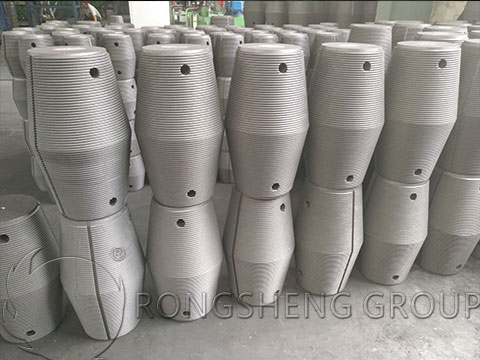
    During producing φ700mm UHP graphite electrode, a higher requirement to prepare graphite electrodes nipple is needed because of the nipple as joint bears higher smelting requests. Therefore, the small-scale and middle-scale experiments were carried on in the lab, using high-grade petroleum needle coke X-grade SUMITOMO coke as a skeleton, Tianjin modified pitch as binder, with various process formulas and two additives to investigate the preparing process and producing techniques.

    During small-scale experiments, the size distributions of formulas were selected by trying measuring vibrated bulk densities of a lot of mixtures. On the basis of them, 9 experimental formulas were designed and carried out. The suitable formulas were optimized by a polarized light microscope and measured results of samples.

    A small-scale experiment shows that some formulas are gained by the method of measuring vibrated bulk density, whose characteristics are intermittent size distribution and continuous size distribution. Samples’ properties based on formulas derived from intermittent size distribution are better than the ones based on formulas derived from continuous size distribution. For example, the bulk density is improved 0.02~0.04 g/cm3, flexural strength is improved 19% ~ 41%,specific electrical resistance is lowered 8% ~ 22%. Compared with middle-temperature coal tar pitch, the modified pitch can apparently improve 0.02 g/cm3 of the bulk density and 10% of the mechanical strength of graphite electrode nipple samples because of 5% higher fixed carbon and binder strength. Stearic acid should be prudently used because it lowers more than 16% mechanical strength of graphite electrodes nipple samples although it could lower the softening point and viscosity of pitch so that it benefits for improving extrusion productivity. Adding proper additives of Fe2O3 could effectively inhabit the puffing in graphitization and improve the mechanical strength of graphite electrodes nipple samples.

    On basis of small-scale experiments, selecting proper process formulas, optimizing various procedure parameters, adding procedure of impregnation and re-baking, middle-scale experiments were carried out with polarized light microscope and SEM, according to commercial production.

    Results of middle-scale experiments show that increasing the content of fine particles in formulas could improve the mechanical strength of graphite electrodes nipple samples. Especially, increasing the content of ultra-fine particles in formulas could increase more than 10% of the mechanical strength of nipple samples. The procedure of impregnation and re-baking is a good method to improve the mechanical strength of graphite electrode nipple samples. But more times, improving amplitude gets less and less, and make the coefficient of thermal expansion rise.

    Properties of final graphite electrodes nipple samples are as follows: bulk density 1.87 g/cm3, flexural strength 29.4MPa, Young’s modulus 17.1 GPa, coefficient of thermal expansion 1.50×10⁻⁶/℃, specific electrical resistance 4.9 μΩm, which are close to those of foreign φ 700mm UHP graphite electrodes nipple.

    Cited in the paper “Development of φ700mm Ultra High Power Graphite Electrodes Nipple”.

    Want more details about the graphite electrodes, Please contact RS Graphite electrode manufacturer.

      Leave a Reply

      We will answer your email soon!

      Characteristics of RP Graphite Electrode

      RP graphite electrode products, mainly suitable for electric arc furnace for steel making. Rongsheng is a leading graphite electrode manufacturer in the industry. Rongsheng’s graphite electrode products have good electrical conductivity and perform well under the harsher smelting conditions. The following are the Characteristics of RP Graphite Electrode.

      RS High Quality RP Graphite Electrode
      RS High-Quality RP Graphite Electrode

      Characteristics of RP Graphite Electrode in Rongsheng

      • The RP graphite electrode also is known as the regular power graphite electrode.
      • Low ash, the ash content no more than 0.3%;
      • Low thermal expansion coefficient, less breakage, and low consumption;
      • High thermal shock resistance, low crushing and fracture rates;
      • competitive price;
      • Free consultation and installation.

      Raw Material Characteristics of RP Graphite Electrode

      The main raw material used in the production of the RP graphite electrode is petroleum coke. For ordinary power graphite electrode production, a small amount of pitch coke can be added. The sulfur content of petroleum coke and asphalt coke cannot exceed 0.5%.

      The graphite electrode mainly uses petroleum coke and needle coke as raw materials, and coal pitch as a binder. It is made by calcination, batching, kneading, pressing, roasting, graphitization and machining. A graphite electrode is a conductor that releases electrical energy in the form of an arc in an electric arc furnace and heats and melts the charge. According to its quality index, it can be divided into the RP graphite electrode, HP graphite electrode, and the UHP graphite electrode.

      graphite electrode production
      Graphite Electrode Production

      Production Characteristics of RP Graphite Electrode

      (1) Long production cycle. The production cycle of ordinary power graphite electrodes is about 45 days.

      (2) Higher energy consumption. The production of 1t RP graphite electrode requires about 6000kW·h of electrical energy; thousands of cubic meters of gas or natural gas; about 1t of metallurgical coke particles and metallurgical coke powder.

      (3) Many production processes. The production process includes calcination of raw materials, crushing of milling powder, ingredients, kneading, shaping, roasting, impregnation, graphitization, and mechanical processing. Its production requires many special types of mechanical equipment and special structure kiln. The construction investment is large and the investment recovery period is long.

      (4) In the process of producing graphite electrodes, a certain amount of dust and harmful gases will be generated. We need to take perfect ventilation and dust reduction measures which are benefits to environmental protection, to eliminate harmful gases.

      Get Graphite Electrode Price

      If you need to purchase graphite electrodes for electric furnace equipment, please contact us. Rongsheng graphite electrode supplier can provide customers with high quality and reliable graphite electrodes. We have sold graphite electrodes to Russia, Kenya, South Africa, Chile, and other countries and regions. Purchase RP graphite electrode, high power graphite electrode, ultra-high power graphite electrode. Please leave your specific electrode requirements on our webpage. Our sales manager will contact you soon.

        Leave a Reply

        We will answer your email soon!

        What are Graphite Electrodes?

        What are graphite electrodes? Graphite electrodes are kind of conductive material in electric arc furnace steelmaking production. The graphite electrodes are mainly made of petroleum coke and needle coke as raw materials, and coal pitch is used as a binder, and is made by calcination, batching, kneading, pressing, roasting, graphitization, and machining. Due to some special properties of graphite. It is a conductor that releases electrical energy in the form of an electric arc to heat and melt the charge in the electric arc furnace. According to its quality index, it can be divided into rp graphite electrode, high power graphite electrode and ultra high power graphite electrode.

        RS High Quality RP Graphite Electrode
        RS High Quality RP Graphite Electrode

        What are the graphite electrodes?

        Rp graphite electrode, produced with ordinary grade petroleum coke. Graphitization temperature is low, its resistivity is high, the coefficient of linear expansion is large, and its thermal shock resistance is poor, so the current density is allowed to be low.

        HP graphite electrode, produced with high-quality petroleum coke (or low-grade needle coke). Sometimes the electrode body needs to be dipped. Its physical and mechanical properties are higher than those of ordinary power graphite electrodes, such as low resistivity, which allows a large current density.

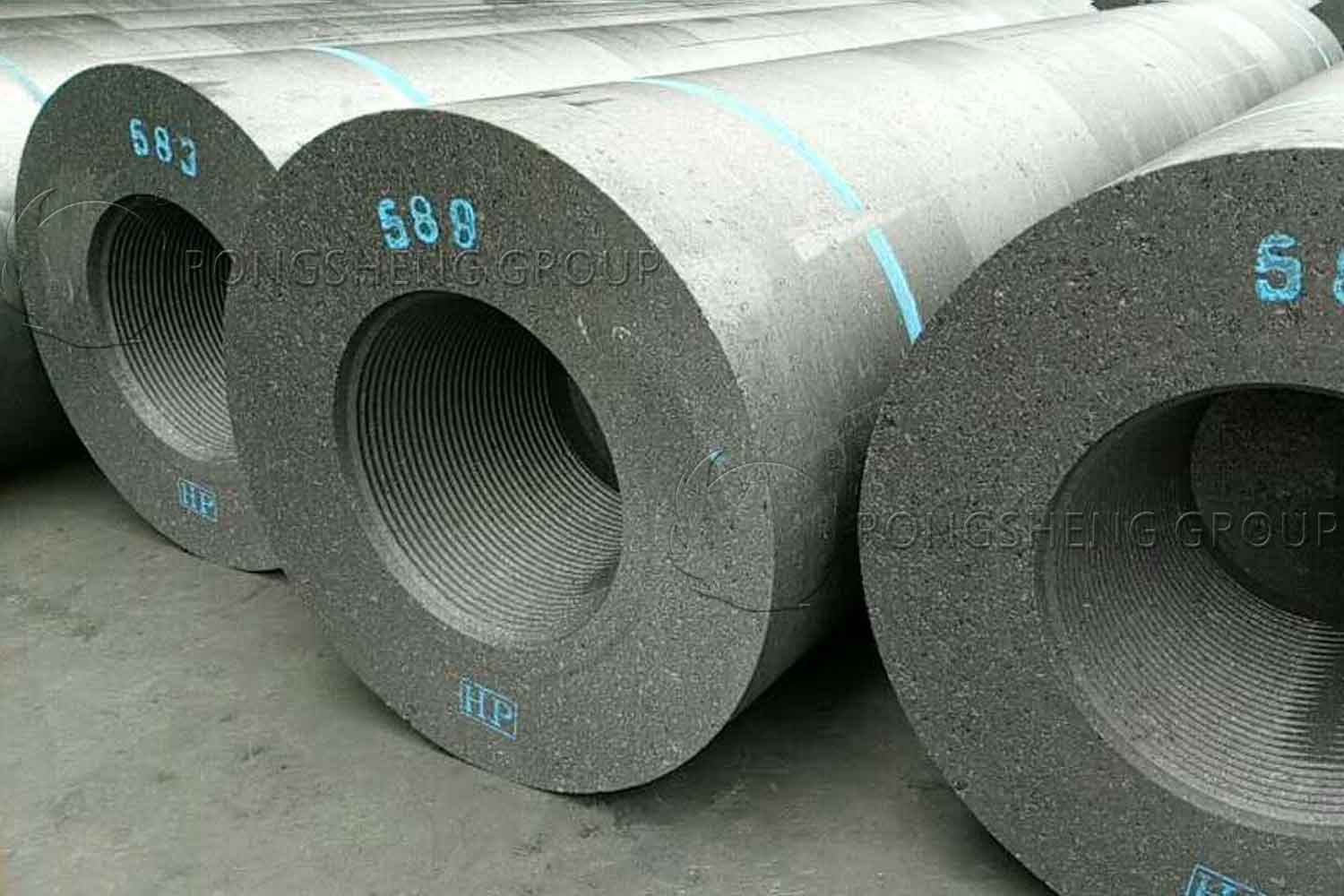
        UHP graphite electrodes must be produced with high-grade needle coke. And the graphitization heat treatment should be carried out in the internal graphitization furnace. The graphitization temperature is as high as 2800 ~ 3000 ° C. Therefore, the resistivity is lower, allowing greater current density, the linear expansion coefficient is smaller, and has excellent thermal shock resistance.

        The main raw material for the production of graphite electrodes is petroleum coke. A small amount of pitch coke can be added to rp graphite electrodes, and the sulfur content of petroleum coke and pitch coke cannot exceed 0.5%. Needle coke is also needed when producing high-power or ultra-high-power graphite electrodes. The main raw material for the production of aluminum anodes is petroleum coke, and the sulfur content should be controlled not more than 1.5% to 2%. Petroleum coke and asphalt coke should meet the relevant national quality standards.

        Graphite Electrode used in DC Electric Arc Furnace
        Graphite Electrode used in DC Electric Arc Furnace

        The development of electric furnace steelmaking technology, the enlargement of electric furnaces, the increase of electric power per unit furnace capacity and the use of DC electric arc furnaces have constantly put forward new requirements for the variety and performance of graphite electrodes. The use of high-power and ultra-high-power electric furnace steelmaking can shorten the furnace melting time, improve production efficiency, reduce power consumption and reduce graphite electrode consumption.

        RS Graphite Electrodes Factory
        RS Graphite Electrodes Factory

        RS Graphite Electrode Manufacturers

        RS Group, one of the Graphite electrode manufacturers, supply rp, hp, uhp graphite electrodes to the steelmaking plant. And our customer has been more than 60 countries anf areas all over the world. If you are want to buy the rp graphite electrode, please contact us, we will reply you as soon as possible.

          Leave a Reply

          We will answer your email soon!

          Calculation Method of Graphite Electrode Consumption of Electric Arc Furnace Electrode

          The graphite electrode consumption in electric furnaces is generally considered to be the third largest in the cost of molten steel after scrap steel and electrical energy. In Europe, the consumption range is 3 to 7 kg / t (crude steel). This article will analyze the main reasons for the differences in electrode consumption of various electric furnaces. It is also pointed out that when the influence of graphite electrode properties is small, the operating conditions of the furnace are the main factors for the change in electrode consumption.

          RS Graphite Electrode
          RS Graphite Electrode

          Electric Arc Furnaces use electrical energy as the main energy source. Electric energy draws arcs through graphite electrode and charge discharge. Produce high temperatures up to 2000 ~ 6000 ℃. The scrap material is melted by means of arc radiation, temperature convection and heat conduction. In the configuration of graphite electrodes for steel-making electric arc furnaces, the basic principles of “ordinary power electric furnace with ordinary power graphite electrode, high power electric furnace with high power graphite electrode, and ultra high power electric furnace with ultra high power graphite electrode” should be followed .

          Arc furnace electrodes, especially graphite electrode that connected by nipple joints, and can effectively prevent the electrodes from breaking during use. Electric arc furnaces are electric furnaces that use high temperatures produced by electrode arcs to smelt ores and metals. The energy is very concentrated when the gas discharge forms an arc, and the temperature in the arc zone is above 3000 ° C. For smelting metals, the electric arc furnace has greater process flexibility than other steel-making furnaces, can effectively remove impurities such as sulfur and phosphorus, the furnace temperature is easy to control, and the equipment occupies a small area.

          Calculation Method of Graphite Electrode Consumption

          The graphite electrode is the last part of the short-circuit power supply of the electric arc furnace. The end of the graphite electrode generates a strong arc to melt the charge and heat the molten steel, that is, the electrode is the central hub that converts electrical energy into thermal energy. The electrode is subjected to high temperature, furnace gas oxidation and colliding material impact during operation. In particular, the junction of the two electrodes has a higher resistance and lower conductivity than other places. Easy to trip, oxidize, fall off and break. As a result, the electrode is greatly consumed, and the smelting time is extended, and the productivity is reduced.

          In 1982, Bowman divided the normal graphite electrode consumption into front end consumption and side consumption. Both can be calculated using the following formula:

          Normal Graphite Electrode Consumption: CE = Cγ + Cs

          Front-End Consumption: Cγ = Vγ · TOntap / W, Vγ = Kγ · I2 / dnγ

          In the formula,

          TOntap — electric furnace power transmission time, h;

          W — Electric furnace tapping weight, t;

          Vγ — consumption speed of electrode front end, kg / h;

          Kγ-front-end consumption constant (Bowman gives Kγ = 0.0361 for AC arc furnace and n usually takes 0.58)

          I ———— Arc current intensity, kA;

          dγ ——— The diameter of the electrode front end, m.

          Side Consumption: Cs = Vs · TTop-Top / W, Vs = 3Ks · S

          In the formula,

          TTop-Top — Electric furnace smelting period, h;

          W — Electric furnace tapping weight, t;

          Vs — consumption speed of electrode side, kg / h;

          Ks — oxidation consumption rate, kg / (m2 · h);

          S — oxidized surface area in the electrode furnace, m2.

          At present, in the production process, the Bowman graphite electrode consumption model has been widely recognized. Wang Mingli and others believe that once the smelting process is stable, the current supplied by the power supply has the greatest impact on the electrode unit consumption.

          It is generally believed that in the smelting process, the calculation of graphite electrode consumption has two concepts, net consumption and gross consumption. Net consumption refers to the technical consumption of electrodes consumed during high-temperature sublimation, oxidation and participation in smelting. Gross consumption is the sum of the net consumption and the losses that have not been participated in the smelting. In other words, the graphite electrode consumption model mentioned above is only technical consumption, that is, it is classified as net consumption. Gao Zhanbiao and others believe that at this stage the steel industry mainly uses the following two methods to calculate graphite electrode consumption.

          (1) Production method

          The output method is based on the amount of molten steel (finished product) produced in a certain period, and the amount of graphite electrode input during the same period minus the remaining amount on the furnace is consumed.

          Gross Loss of Tons of Graphite Electrode: MM = MZ / MG

          Net Consumption of Ton Steel Graphite Electrode: MJ = MC / MG

          In the formula,

          MZ—the total consumption of the electrode (input amount-remaining amount on the furnace), kg / t;

          MC—The pure consumption of the electrode (input amount-remaining amount on the furnace-loss amount), kg / t;

          MG-the amount of finished molten steel, t.

          (2) Power consumption method.

          The power consumption method is based on the cumulative power consumption of pure heating time in a certain period. The amount of graphite electrode input during the same period deducts the remaining amount on the furnace as the consumption (LF furnace is calculated based on the power consumption and electrode for each temperature increase of 1 ℃).

          Graphite Electrode Consumption per Kilowatt Hour: MX = 1000 × MC / QH

          In the formula,

          MC-the pure consumption of the electrode (input amount-residual amount on the furnace-loss amount), kg / t;

          QH ——— The cumulative power consumption in pure heating time, kW · h.

          At this stage, when calculating the graphite electrode loss, steel companies generally include the amount that is lost without participating in the smelting. This can more fully reflect the center of gravity and key points of loss in the steelmaking process of the electric arc furnace. So as to find the shortcomings in the process parameters to solve.

            Leave a Reply

            We will answer your email soon!